What Are the 2026 Best Electric Pumps for Global Buyers?

Choosing the 2026 best electric pumps requires more than comparing prices, motor ratings, or polished product photos. Global buyers need equipment that performs reliably in real conditions, from dusty construction sites to humid agricultural fields. The right electric pumps should match fluid type, flow rate, pressure, power supply, installation space, and maintenance resources.

Performance matters. So does practicality.

This guide examines electric pumps through an experienced buyer’s lens. It considers energy efficiency, motor protection, corrosion resistance, noise levels, control systems, spare-part access, and supplier support. A compact centrifugal pump may suit clean water, while a robust submersible model may handle drainage more effectively. Buyers should also verify voltage compatibility, plug standards, operating temperatures, and documented safety testing before placing an order.

Specifications can mislead.

A pump rated for high flow may lose efficiency through narrow pipes or excessive lift. A low-cost model may become expensive after repeated seal failures, difficult repairs, or delayed replacement parts. Reliable suppliers should provide clear manuals, traceable test information, warranty terms, and responsive technical communication. Independent certifications can strengthen confidence, but they should be checked against the actual model.

No single pump deserves to be called “best” for every market. Regional infrastructure, water quality, climate, and service skills change the decision. Even careful evaluations may overlook a field problem, such as unstable electricity or unexpected sediment. That limitation deserves attention. By balancing verified performance with practical ownership experience, global buyers can make more informed choices in 2026.

What Are the 2026 Best Electric Pumps for Global Buyers?

What Defines the Best Electric Pumps for Global Buyers in 2026?

What Defines the Best Electric Pumps for Global Buyers in 2026?

The best electric pump is not simply the fastest or most powerful model. It must match the actual duty point, including flow rate, head pressure, liquid temperature, and operating hours. A properly selected motor can reduce wasted energy and prevent overheating. Buyers should also check voltage, frequency, phase requirements, and enclosure protection before ordering. These details matter when equipment moves between regions.

Field experience shows that installation conditions often differ from catalog assumptions. Dust, unstable power, long pipelines, and limited maintenance access can change performance. Reliable pumps should offer clear manuals, traceable test data, replaceable wear parts, and accessible technical support. Materials must suit the liquid, especially when handling abrasive or mildly corrosive fluids. No pump is perfect. A highly efficient unit may still fail if its seal, cable, or control panel is poorly matched.

Tips: Ask for a performance curve at your working point, not only maximum output. Confirm factory testing and request efficiency data under realistic loads. Check whether local technicians can service the motor and seal. Leave room for uncertainty; site measurements are sometimes incomplete. A small flow meter and pressure gauge can reveal more than a polished specification sheet.

Key Electric Pump Types and Their Main Applications

What Are the 2026 Best Electric Pumps for Global Buyers?

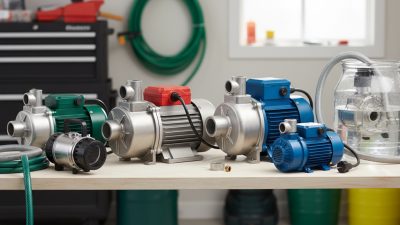
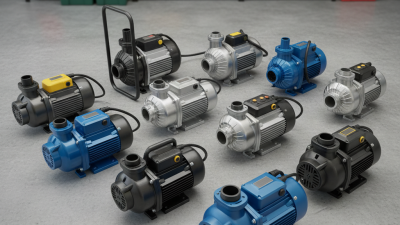
Choosing the best electric pump begins with the application, not the sales label. Centrifugal pumps suit clean water, irrigation, cooling loops, and many light industrial systems. They deliver steady flow through open impellers and pipelines. However, performance can fall sharply when fluid viscosity increases. Buyers should check flow rate, head pressure, motor efficiency, and operating temperature.

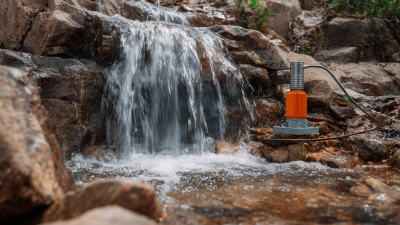
Submersible pumps work below the liquid surface. They are practical for drainage, wells, wastewater pits, and flood control. Their sealed motors reduce priming problems, but damaged cables or poor sealing can create serious maintenance risks. Diaphragm pumps handle chemicals, slurries, and fluids containing small solids. Their controlled displacement supports accurate dosing. Peristaltic pumps are gentler with sensitive liquids, such as laboratory solutions or concentrated additives. They still require regular tube replacement.

Small details matter globally. Confirm voltage, frequency, plug standards, enclosure rating, and available spare parts before ordering. A pump designed for 60 Hz power may perform differently on a 50 Hz grid. Stainless steel suits many corrosive environments, while reinforced polymers can reduce weight and cost. Yet material compatibility must be verified against the actual fluid. No pump is perfect. I have seen projects overvalue maximum flow and ignore noise, dry-running protection, or seasonal demand. A modestly sized pump, tested under real conditions, often provides more reliable service.

What Are the 2026 Best Electric Pumps for Global Buyers?

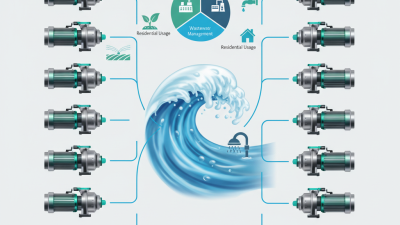
Key electric pump types and their main applications, compared by representative upper-end flow capacity commonly available in commercial systems.

Centrifugal and submersible pumps are generally preferred for high-volume water transfer. Diaphragm and piston pumps suit dosing, spraying and high-pressure duties, while gear and peristaltic pumps are commonly selected for controlled transfer of viscous, sensitive or abrasive fluids. Actual performance depends on head, pressure, fluid properties, temperature and duty cycle.

Essential Performance and Efficiency Factors to Compare

What Are the 2026 Best Electric Pumps for Global Buyers?

For global buyers, pump efficiency begins with accurate duty requirements. Compare flow rate, pressure, total head, and operating hours before reviewing advertised power ratings. A pump moving 40 litres per minute may consume more energy if it works against excessive resistance. Measure the pipe length, elevation change, bends, and filter condition. Small details matter.

Motor efficiency is only one part of performance. Look for stable output, low vibration, thermal protection, and reliable starting under changing loads. Variable-speed control can reduce energy use when demand fluctuates, such as in irrigation or water circulation. However, control electronics may require careful voltage matching. Check frequency, phase type, and allowable voltage range for the destination market.

Materials also affect long-term value. Stainless steel may suit humid environments, while reinforced polymers can reduce weight and corrosion risk. Confirm the sealing method and ingress protection rating for dusty or wet locations. Maintenance access should be practical, not merely listed in a specification sheet. Ask for efficiency curves, test conditions, noise data, spare-part guidance, and safety documentation. Marketing figures can look precise, yet real performance changes with installation. No comparison is perfectly clean. A slight mismatch in pipe sizing can erase expected savings. That assumption deserves challenge before purchase.

Global Standards, Compatibility, and Installation Requirements

Choosing the best electric pump for 2026 starts with standards, not marketing claims. Global buyers should check IEC safety requirements, electromagnetic compatibility, and the enclosure’s IP rating. An IP55 housing may suit a sheltered plant room, but exposed outdoor sites may need stronger protection. Certification must match the destination market. Do not assume one approval works everywhere.

Compatibility is equally practical. Confirm voltage, frequency, phase, plug type, flow rate, head pressure, and pipe diameter before ordering. A pump rated for 220–240 V may fail on a 110–120 V circuit. Frequency differences can also affect motor speed and output. Installation requires correct grounding, suitable overcurrent protection, and a residual-current device where local rules require one. Keep the inlet short and clear. Poor priming remains a common failure.

Tips: Measure the actual pipe route, not the planned route. Test water quality and temperature first. Leave space for servicing. A check valve can prevent reverse flow, but it cannot fix poor sizing. In field inspections, I have seen efficient pumps underperform because installers ignored elevation changes. That mistake is easy to repeat. A perfect pump does not exist; reliable selection depends on honest site data and careful verification.

How to Select the Right Electric Pump for Different Markets

Choosing the best electric pump for 2026 depends on the market, not the catalogue rating. A pump for a humid coastal site needs corrosion protection and sealed bearings. A high-altitude installation may require extra motor capacity. Voltage, frequency, pipe length, fluid temperature, and local service access must be checked together. The U.S. Department of Energy reports that pumping systems can represent 25% to 50% of industrial facility electricity use. Small efficiency losses can become expensive.

Tips: Match the pump curve to real operating conditions. Do not select by maximum flow alone. For European markets, verify applicable ecodesign and motor-efficiency requirements. In North America, review local electrical and safety certifications. In regions with unstable grids, consider voltage tolerance, soft starting, and available spare parts. For agriculture, dust protection and simple maintenance may matter more than advanced controls. For water treatment, material compatibility and continuous-duty performance deserve priority.

The UNESCO World Water Development Report 2024 states that roughly half the global population experiences severe water scarcity for at least part of the year. Demand will vary sharply between markets. Efficient pumps, variable-speed control, and leak-resistant systems can reduce operating pressure. Yet efficiency claims need independent testing under actual head and flow conditions. A perfect shortlist rarely exists. Buyers should also question overly optimistic payback estimates, especially where electricity prices or maintenance skills are uncertain. The best choice is usually the pump that performs reliably after installation, not the one with the highest laboratory rating.

What Are the 2026 Best Electric Pumps for Global Buyers?

How to Select the Right Electric Pump for Different Markets: a practical comparison of pump technologies, typical operating ranges, application requirements, electrical compatibility, and selection priorities.

Electric Pump Type Typical Flow Range Typical Head or Pressure Best-Fit Applications Suitable Global Markets Key Selection Criteria Electrical and Environmental Considerations Main Advantages Important Limitations
Self-Priming Centrifugal Pump Approximately 2–120 m³/h Approximately 10–70 m Water transfer, irrigation, drainage, rainwater systems, light industrial circulation Agriculture, residential infrastructure, construction, and general industry Check suction-lift capability, required flow, total dynamic head, fluid temperature, and solids content. Confirm local voltage and frequency; use weather protection outdoors. Dry-running protection is recommended where water supply is intermittent. Simple operation, broad availability, and good performance for clean or lightly contaminated water. Priming performance decreases with excessive suction lift, air leakage, or long suction pipework.
Submersible Drainage Pump Approximately 5–300 m³/h Approximately 5–50 m Flood control, construction-site dewatering, basements, pits, and wastewater drainage Flood-prone regions, urban construction markets, mining, and municipal services Select the correct solids-passage diameter, discharge size, pump material, float-switch arrangement, and duty cycle. Cable sealing, motor protection, grounding, and enclosure suitability are essential. Continuous submergence requirements vary by design. No separate priming system is normally required and installation is effective in deep or confined spaces. Inspection and retrieval can be more difficult; abrasive or corrosive liquids may require upgraded materials.
Submersible Sewage Pump Approximately 5–250 m³/h Approximately 8–60 m Municipal sewage, commercial wastewater, septic systems, and industrial effluent Municipal, hospitality, food-processing, and industrial wastewater markets Evaluate solids passage, cutter requirements, clog resistance, wastewater temperature, pH, and expected peak inflow. Use suitable insulation, overload protection, grounding, and corrosion-resistant components. Local wastewater regulations must be followed. Designed for contaminated liquids and available in configurations for high solids content. Incorrect sizing may cause clogging, sediment buildup, excessive energy use, or insufficient turnover.
Booster Pump with Variable-Speed Drive Approximately 1–100 m³/h Approximately 20–120 m Building water pressure, hotels, apartments, commercial facilities, and process-water boosting High-rise buildings, water-stressed cities, hospitality, and commercial construction Size the pump from simultaneous demand, minimum inlet pressure, pressure setpoint, pipe losses, and number of users. Verify compatibility with local grid voltage, frequency, harmonics requirements, ventilation, and control-panel standards. Maintains more consistent pressure and can reduce energy consumption during partial-load operation. Higher control-system complexity and greater sensitivity to poor installation, unstable power, or inadequate cooling.
Horizontal Multistage Pump Approximately 0.5–40 m³/h Approximately 30–250 m High-pressure clean-water transfer, boiler feed, reverse-osmosis pretreatment, and washing systems Industrial processing, commercial buildings, water treatment, and manufacturing Confirm clean-fluid quality, required pressure, stage count, seal material, temperature, and minimum stable flow. Usually requires a dry, ventilated installation and reliable inlet conditions. Voltage and motor-efficiency requirements vary by market. High pressure from a compact footprint and efficient operation within its intended duty range. Not ideal for large solids, highly viscous liquids, or applications with poor suction conditions.
Vertical Multistage Pump Approximately 1–120 m³/h Approximately 30–300 m Water boosting, boiler circulation, industrial process systems, and water-treatment skids Commercial high-rise projects, factories, utilities, and desalination facilities Consider installation height, service clearance, NPSH available, pressure rating, seal selection, and duty-point efficiency. Requires a stable foundation and suitable pipe support. Variable-frequency control may require additional commissioning and protection. High pressure with a relatively small floor area and flexible stage configuration. Installation and maintenance may be less convenient where ceiling height or service access is limited.
Peripheral or Regenerative Pump Approximately 0.1–8 m³/h Approximately 20–120 m Small pressure-boosting systems, fuel transfer, dosing support, and clean-fluid equipment Light industrial equipment, laboratory systems, small commercial installations, and agriculture Select only for low-flow, relatively clean liquids and verify viscosity, temperature, pressure, and continuous-duty suitability. Protect against dry running and excessive inlet restriction. The motor must match local voltage, frequency, and enclosure needs. Compact design, relatively high pressure for its size, and suitability for small equipment packages. Flow capacity is limited and efficiency may fall significantly outside the specified operating point.
Progressive Cavity Pump Approximately 0.05–150 m³/h Approximately 10–240 m Sludge, viscous liquids, polymers, food products, wastewater, and shear-sensitive fluids Food processing, wastewater treatment, chemical processing, mining, and pulp-related industries Match rotor and stator materials to the liquid, assess viscosity and abrasiveness, and include dry-run protection. Motor sizing must account for starting torque. Hygienic or hazardous-area requirements may require specialized construction. Handles viscous, abrasive, and solids-bearing fluids with steady, low-pulsation flow. Dry running can quickly damage the stator; elastomer selection is critical for temperature and chemical compatibility.
Diaphragm Metering Pump Approximately 0.001–1,000 L/h Up to approximately 400 bar, depending on design and flow Water disinfection, chemical dosing, pH control, boiler treatment, and process injection Water treatment, chemical processing, agriculture, food production, and power facilities Specify dosing accuracy, chemical compatibility, maximum pressure, turndown ratio, pulse dampening, and control signal. Use compatible wetted materials, leak protection, ventilation, and electrical isolation where chemicals are hazardous. Accurate metering over a wide range and strong capability for pressurized dosing. Pulsating flow may require a dampener; valves and diaphragms need periodic inspection and replacement.
Solar-Compatible DC Pump Approximately 0.5–60 m³/h Approximately 5–150 m Off-grid irrigation, livestock watering, remote villages, solar water supply, and emergency water systems Remote rural areas, sunny regions, humanitarian projects, and off-grid agriculture Size according to daily water demand, solar resource, total head, storage capacity, seasonal variation, and well recovery rate. Confirm DC voltage range, controller type, surge protection, battery requirements, cable length, and local installation practice. Can operate without a conventional grid and has low operating emissions when powered directly by solar energy. Output varies with sunlight unless water storage, batteries, or hybrid grid control is included.
Magnetic-Drive Chemical Pump Approximately 0.1–100 m³/h Approximately 5–80 m Acids, alkalis, plating liquids, chemical circulation, and corrosive process fluids Chemical manufacturing, electronics, metal finishing, laboratories, and water treatment Verify chemical concentration, temperature, specific gravity, vapor pressure, solids content, and material compatibility. Consider containment, ventilation, hazardous-area classification, electrical grounding, and leak-detection requirements. Sealless construction can reduce the risk of shaft-seal leakage in compatible applications. Magnetic coupling can be damaged by dry running, unsuitable solids, excessive temperature, or operation outside the duty range.
Hot-Water Circulation Pump Approximately 0.1–50 m³/h Approximately 2–40 m Domestic hot water, heating loops, solar thermal systems, and industrial temperature-control circuits Residential construction, commercial buildings, district heating, and process facilities Check fluid temperature, system pressure, flow requirement, pipe size, corrosion conditions, and continuous-duty rating. Insulation, condensate protection, electrical safety, and local building-code compliance are important. Compact circulation solution with low maintenance when correctly matched to a closed-loop system. Incorrect temperature limits, air in the system, or low water quality can shorten service life and increase noise.
Buyer checklist: Confirm the duty point, total dynamic head, fluid properties, solids content, operating temperature, electrical supply, installation environment, efficiency requirements, required certifications, spare-parts availability, and local service capability before purchasing. Actual performance depends on the complete pump system and operating conditions.

Whether your solution requires a single pumping application or an expansive engineered system,
CheckPoint is committed to becoming your partner in excellence.