



What Is the Best Hydraulic Oil Made in China?
Choosing the best hydraulic oil made in China requires more than comparing prices or reading bold package claims. The right product must match the pump, operating temperature, pressure, seals, and maintenance schedule. A technician may notice the difference when a machine starts quietly at minus 10°C, or when fluid remains stable beside a hot steel reservoir. Details matter.
This guide examines Chinese hydraulic oil through practical and technical evidence. It considers viscosity grades, oxidation resistance, anti-wear performance, cleanliness levels, and compatibility with common equipment. Product data sheets, safety documents, certificates of analysis, and batch traceability deserve close attention. Independent laboratory testing can also reveal water content, particle contamination, and viscosity changes after use. Manufacturer experience matters, but it should not replace verification.
Some Chinese producers meet widely recognized quality systems and international fluid specifications. However, certification alone does not guarantee excellent performance in every machine. Performance varies. A product successful in a construction excavator may behave differently in a factory press. Buyers should request current test results and confirm the oil against the equipment maker’s requirements.
There is no universal winner. Even careful comparisons have blind spots. Storage conditions, counterfeit risks, and incomplete technical information can affect conclusions. This article therefore evaluates reliability, application fit, technical transparency, and long-term value. The aim is a realistic choice, not an exaggerated promise.
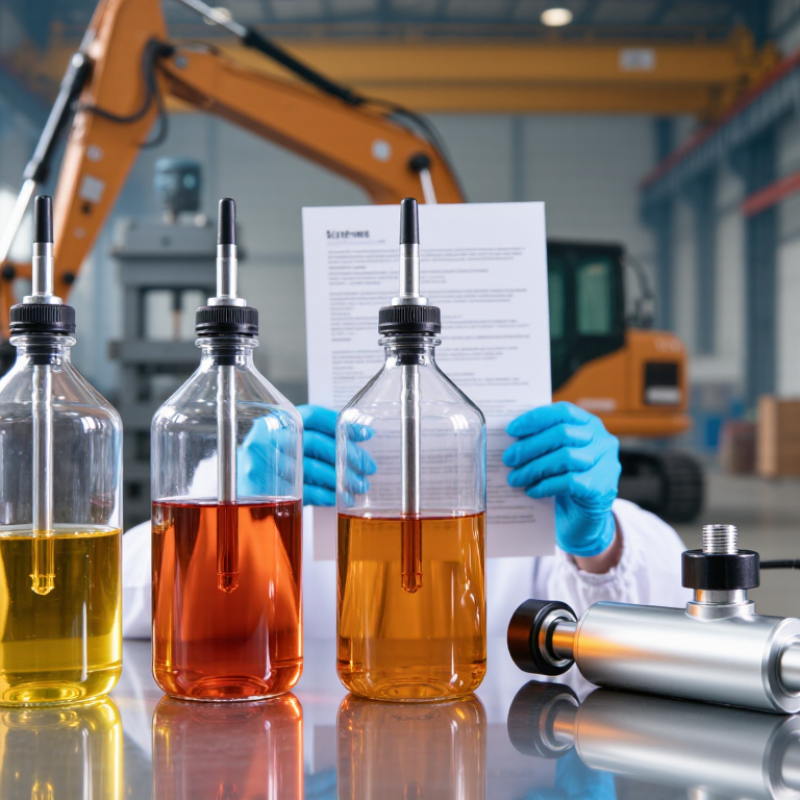
Define “Best” Using ISO 11158, DIN 51524, and ISO VG 32–68
“What is the best hydraulic oil made in China?” cannot be answered by origin alone. In practice, the best fluid matches the machine’s duty, seals, temperature range, and service schedule. ISO 11158 provides performance categories for petroleum-based hydraulic fluids, while DIN 51524 defines requirements for HLP and HVLP types. These references help buyers compare performance instead of relying on country labels. The standard number matters. Full test evidence matters more.
ISO VG 32, 46, and 68 describe kinematic viscosity at 40°C. VG 32 can support cold starts and faster response, but may thin too much under heat. VG 68 offers a thicker film in hot, heavily loaded systems, yet can increase energy loss and startup resistance. VG 46 is often a practical middle choice, not a universal answer. Pump design, ambient temperature, pressure, and manufacturer instructions should determine the grade.
A reliable Chinese-made product should provide a current technical data sheet, batch traceability, and test results supporting ISO 11158 or DIN 51524 claims. Check viscosity, viscosity index, demulsibility, air release, oxidation stability, and cleanliness. Ask how samples were tested. Be careful with vague “meets” language; it may describe an internal target, not formal approval. Field checks also matter: inspect filters, noise, foaming, and oil color after operation. I would not choose from price alone. Lab data can look strong, while an unsuitable VG grade still fails in a real machine. That judgment remains imperfect.

What Is the Best Hydraulic Oil Made in China?
“Best” is defined by compliance with ISO 11158 and DIN 51524, while ISO VG 32–68 specifies viscosity at 40°C.
The chart shows the ISO 3044 kinematic-viscosity limits for ISO VG 32, 46, and 68 hydraulic oils at 40°C. Each grade has a nominal viscosity and an allowable range of approximately ±10%. ISO 11158 and DIN 51524 classify performance levels such as HM/HLP and HV/HVLP; they do not rank products or identify a single universal “best” oil. For equipment operating across wider temperature changes, a compliant HV/HVLP formulation may be preferred, provided the equipment manufacturer approves it.
Compare Chinese Hydraulic Oils by Viscosity, VI, AW, and Oxidation Stability
What Is the Best Hydraulic Oil Made in China?
The best Chinese hydraulic oil depends on equipment, temperature, pressure, and service hours. Viscosity is the first practical check. ISO VG 32 suits colder workshops and fast systems. ISO VG 46 fits many general industrial applications. ISO VG 68 can protect slower equipment under heavier loads. However, choosing by viscosity alone can create sluggish movement or poor lubrication. A viscosity test at operating temperature gives better evidence than a product label.
Tips: Check the oil’s viscosity index, or VI. A higher VI usually means smaller viscosity changes across temperatures. Review the anti-wear, or AW, performance through recognized laboratory reports. Look for four-ball wear results, not vague claims. Oxidation stability also matters, especially near hot pumps and continuous-duty machinery. Ask for batch traceability, technical data, and compatibility guidance before changing fluids.
From practical maintenance work, AW protection often becomes visible through quieter pumps and fewer metal particles in filters. Yet one test cannot predict every machine’s life. Oxidation results may differ from real conditions because contamination, water, and heat accelerate fluid aging. Some Chinese hydraulic oils offer strong specifications and consistent manufacturing, while others need closer verification. A reliable comparison should include viscosity at 40°C and 100°C, VI, AW test data, oxidation resistance, cleanliness level, and seal compatibility. Small differences matter. Fresh oil still fails when storage or filtration is neglected.
Verify TDS Results with ASTM D445, D2270, D92, and D943 Tests
Choosing the best hydraulic oil made in China requires more than reading a polished TDS.
Laboratory evidence matters. ASTM D445 measures kinematic viscosity at controlled temperatures, commonly 40°C and 100°C. This result shows whether the oil may flow correctly through pumps, valves, and narrow passages.
ASTM D2270 uses viscosity data to calculate viscosity index, indicating how sharply viscosity changes with temperature. However, a high viscosity index alone does not prove superior wear protection.
ASTM D92 measures flash point with the Cleveland open-cup method. It helps assess handling and thermal behavior, but it is not an operating-temperature limit.
ASTM D943 evaluates oxidation life under heated, oxygen-rich conditions. A longer induction period can support longer service, yet field contamination may shorten it.
Real systems are less clean than laboratories.
Ask for original test reports, not only summarized TDS figures.
Take a sealed sample from the actual production batch. Send it to a competent, independent laboratory with calibrated instruments. Record the test temperature, sample date, batch number, and method revision.
These details can expose differences between published values and delivered oil. One detail is easy to miss. Some suppliers provide typical values rather than guaranteed limits. That distinction deserves written clarification.
Testing is not perfect. D943 may require extended time, while D445 results can shift after contamination or storage. Compare several batches, inspect the oil’s traceability, and review whether the laboratory followed ASTM procedures exactly.
Assess ISO 4406 Cleanliness Levels, Including 18/16/13 Filtration Targets
When evaluating the best hydraulic oil made in China, cleanliness deserves serious attention. ISO 4406 provides a practical way to measure particle contamination. The code 18/16/13 represents particles larger than 4, 6, and 14 micrometres.
In approximate terms, this target allows 1,300–2,500 particles above 4 micrometres per millilitre. The limits fall to 320–640 particles above 6 micrometres, and 40–80 particles above 14 micrometres. These figures are not a simple quality badge. They show whether the oil suits sensitive pumps, servo valves, and precision control systems.
Clean oil still needs disciplined handling. During field inspections, I have found that a clean drum can become contaminated through open funnels, dusty storage, or poorly flushed transfer hoses. Ask the supplier for recent laboratory results, sampling procedures, and viscosity data at operating temperatures. A proper particle count should identify the test method and sampling point.
The 18/16/13 target is useful, but not universal. Some heavy-duty systems accept higher contamination levels, while servo equipment may require tighter control. Filter performance, tank cleanliness, water separation, and additive compatibility also matter. One overlooked detail is sampling technique. Poor sampling can make excellent oil appear dirty, or hide contamination.
Verification matters. Yet it is often skipped.
Select Suppliers Through ISO 9001, Batch COAs, Warranty, and Lifecycle Cost
The best hydraulic oil made in China is not chosen by origin alone. It is selected through evidence. ISO’s 2022 Survey recorded about 1.26 million ISO 9001 certificates worldwide, yet certification only confirms a quality management system. It does not guarantee every drum performs equally. Ask suppliers for the certificate scope, audit status, and traceable production records. Then check whether the oil meets ISO 11158 or ASTM D6158 requirements for the intended hydraulic system.
Batch COAs should show viscosity at 40°C, viscosity index, water content, acid number, particle count, and oxidation results. Request independent laboratory verification for several recent batches. One attractive sample proves little. Real operating experience matters more. Record pump noise, filter replacement intervals, leakage, and oil condition during field trials. A small mistake here can become an expensive maintenance lesson.
Warranty terms should define coverage, testing procedures, storage limits, and response time. Avoid vague promises. A three-year warranty means little without a documented claims process. The 2023 Global Lubricants Industry analysis by Kline indicates that performance, supply reliability, and total cost increasingly influence lubricant purchasing decisions. Therefore, calculate lifecycle cost, not only the purchase price. Include flushing, disposal, downtime, energy losses, replacement filters, and unplanned repairs. Lower-priced oil may still cost more. I would also review supplier consistency after twelve months, because initial documentation can look perfect while later batches reveal variation.
What Is the Best Hydraulic Oil Made in China? - Select Suppliers Through ISO 9001, Batch COAs, Warranty, and Lifecycle Cost
| Evaluation Dimension | Recommended Evidence or Benchmark | Why It Matters | Suggested Weight | Screening Result |
|---|---|---|---|---|
| Quality management system | A current ISO 9001:2015 certificate issued by an accredited certification body, with the certificate scope covering lubricant manufacturing or blending. | Confirms that documented processes, corrective actions, traceability, and internal controls are maintained; it does not by itself prove product performance. | 15% | Verify |
| Product classification | The technical data sheet should clearly identify the fluid type, such as anti-wear hydraulic oil meeting the applicable ISO 11158 HM or HV category, where relevant. | Prevents comparison of products designed for different temperature ranges or equipment requirements. | 10% | Match to equipment manual |
| Viscosity grade and viscosity index | Confirm the required ISO viscosity grade, commonly ISO VG 32, 46, or 68, using ASTM D445 for kinematic viscosity and ASTM D2270 for viscosity index. | Incorrect viscosity can increase leakage, pump wear, energy consumption, or cold-start difficulty. | 12% | Compare test values |
| Batch certificate of analysis | Require a batch-specific COA containing lot number, production date, test methods, measured values, specification limits, approval status, and authorized release signature. | A batch COA provides product-level evidence rather than relying only on a generic product brochure. | 18% | Mandatory |
| Core laboratory tests | Review viscosity, viscosity index, water content, acid number, foaming, rust protection, copper corrosion, and demulsibility using recognized ASTM or ISO test methods. | These tests help assess fluid stability, contamination risk, corrosion control, air release, and separation from water. | 15% | Review limits |
| Cleanliness control | Request an ISO 4406 cleanliness code or an equivalent particle-count report for the delivered batch, especially for servo, proportional, or high-pressure systems. | Solid particles are a major cause of valve malfunction, pump wear, and shortened hydraulic-component life. | 10% | Set equipment limit |
| Compatibility and operating range | Obtain written confirmation of seal, hose, paint, filter, and additive compatibility, plus recommended operating-temperature limits for the selected fluid. | A technically suitable oil can still cause seal swelling, shrinkage, foaming, or filter problems if compatibility is not checked. | 8% | Written confirmation |
| Warranty and technical support | Require written warranty terms covering product conformity, claim procedure, retention samples, response time, storage conditions, and exclusions related to contamination or misuse. | A warranty is useful only when responsibilities, evidence requirements, and remedies are clearly defined. | 8% | Review contract |
| Traceability and packaging | Each container should show product grade, batch or lot number, net quantity, manufacturing date, storage guidance, and safety information. Packaging should be sealed and suitable for transport. | Traceability supports recalls, root-cause analysis, stock rotation, and contamination prevention. | 5% | Inspect shipment |
| Lifecycle cost | Calculate: purchase price + freight + filtration or flushing + disposal + labor + downtime risk + component-replacement risk. Do not compare purchase price alone. | A lower-priced fluid may cost more if it requires shorter drain intervals or increases maintenance and failure frequency. | 9% | Use total-cost model |
| Total Evaluation Weight | 100% | Score after verification | ||
Related Posts
-
Top 10 Benefits of Using Hydraulic Oil in Machinery?
-
2026 How to Choose the Right Hydraulic Oil for Your Machinery?
-
Essential Tips for Choosing the Right Hydraulic Oil?
-
Top Fluid Pumps Types and Their Applications Explained?
-
Top 10 Benefits of Solar Pumps for Sustainable Water Solutions
-
Why Are Treatment Pumps Essential for Efficient Water Management?

Whether your solution requires a single pumping application or an expansive engineered system,
CheckPoint is committed to becoming your partner in excellence.