Why Choose Flexible Coupling for Your Industrial Needs?
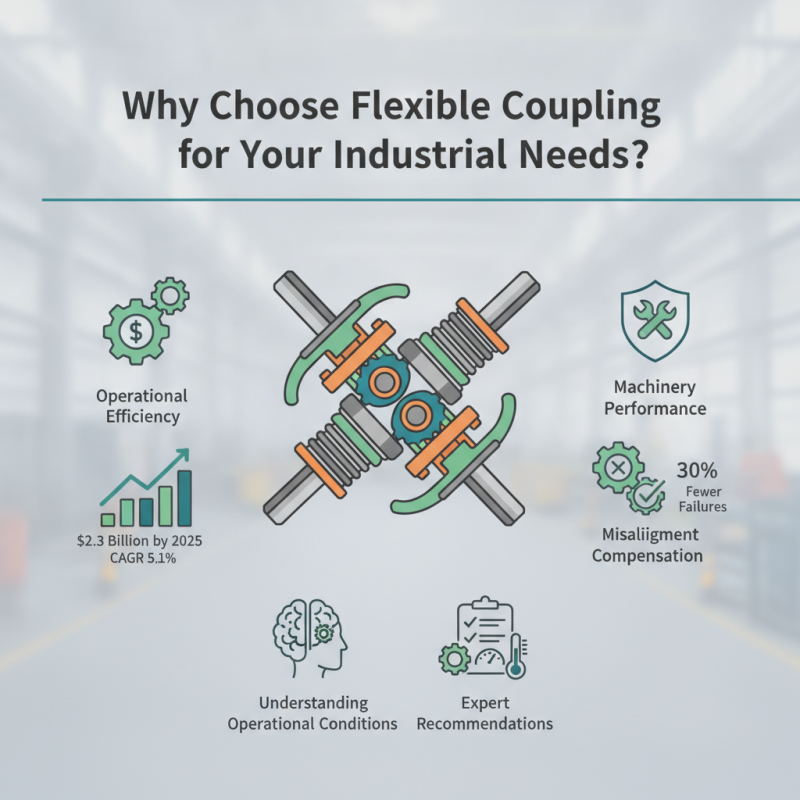
In today's competitive industrial landscape, the choice of components can significantly impact operational efficiency. Flexible Couplings play a vital role in ensuring machinery performance. According to a report by MarketsandMarkets, the global flexible coupling market is projected to reach $2.3 billion by 2025, reflecting a compound annual growth rate (CAGR) of 5.1%. This growth underscores the increasing reliance on these components to manage misalignment and reduce vibration.
Choosing the right type of Flexible Coupling is crucial. These couplings effectively compensate for shaft misalignment, which is a common issue across various industries. A study from the Machinery Lubrication Journal reveals that misalignment can lead to up to 30% of premature component failures. However, not all flexible couplings are created equal. Each type has its strengths and weaknesses, depending on the specific application requirements.
Understanding the operational conditions is essential. Factors like torque, speed, and environmental conditions affect coupling performance. While flexible couplings provide solutions, improper selection may cause inefficiencies. Businesses should carefully analyze their needs and consider expert recommendations to avoid potential pitfalls. The right Flexible Coupling is not just an accessory; it is a pivotal element in achieving optimal machine functionality and reliability.
Benefits of Using Flexible Couplings in Industrial Applications
Flexible couplings provide numerous advantages for industrial applications. They are designed to accommodate misalignment between shafts, reducing wear and tear on machinery. This ability is crucial in environments where precise alignment isn't always achievable. By absorbing shocks and vibrations, flexible couplings enhance system stability. Such features lead to longer equipment lifespan, which is always a concern in industry.
Moreover, their installation is straightforward. Many types come with user-friendly designs that simplify the setup process. However, improper installation or selection can lead to performance issues. It’s essential to evaluate operating conditions to choose the right type. Careful consideration of factors such as torque requirements and operating temperatures is vital. Ignoring these elements may result in equipment failure and unexpected downtime.
The use of flexible couplings improves overall efficiency in manufacturing systems. When utilized correctly, they minimize energy loss caused by misalignment. This efficiency boost can positively impact production rates. Nevertheless, it’s critical to maintain and regularly inspect these components. Without proper upkeep, potential issues may go unnoticed, leading to bigger problems down the line.
Key Types of Flexible Couplings and Their Characteristics
Flexible couplings are essential components in various industrial applications. They serve to connect two shafts while allowing for misalignment, vibration dampening, and motion absorption. Several key types of flexible couplings exist, each offering specific benefits and characteristics.
One common type is the elastomeric coupling. It utilizes rubber or other elastomer materials to offer flexibility. These couplings are effective at reducing shock loads and vibration. They work well in applications like motors and pumps. Another type is the metallic coupling, which is more rigid and often used in high-torque environments. They can handle significant loads and ensure precise alignment. This makes them suitable for heavy machinery and gearboxes.
There are also bellows couplings. They provide excellent flexibility and are ideal for applications requiring precision. Their design allows for angular misalignment without losing strength. On the other hand, there are challenges with maintenance and inspections. Regular checks are necessary to ensure optimal performance. For industries relying heavily on machinery, selecting the right coupling type can significantly impact efficiency and productivity. Each type has its pros and cons, and careful consideration is vital for proper application.
Impact of Flexible Couplings on Equipment Longevity and Efficiency
Flexible couplings play a crucial role in enhancing the longevity and efficiency of industrial equipment. According to a report by the Machinery and Equipment Manufacturers Association, flexible couplings can reduce vibration by up to 50%. This reduction minimizes wear on machinery, ultimately extending operational lifespan. When machinery operates smoothly, energy consumption decreases, leading to improved efficiency.
The impact of flexible couplings is significant in high-load applications. A study published in the Journal of Mechanical Engineering found that using flexible couplings improved transmission efficiency by as much as 30% compared to rigid couplings. These couplings accommodate misalignment, reducing stress on components and preventing premature failures. It is important to note, however, that misalignment still occurs in some cases. Regular maintenance and inspections can help in identifying issues before they escalate.
Incorporating flexible couplings can also lead to cost savings. A survey conducted by Industrial Maintenance in 2022 indicated that companies reported up to a 25% reduction in downtime when using these couplings. However, choosing the right type of flexible coupling is essential. The wrong selection may lead to further complications, including unexpected repairs and decreased efficiency. Balancing the benefits with potential downsides is vital for sustainable operations.
Why Choose Flexible Coupling for Your Industrial Needs? - Impact of Flexible Couplings on Equipment Longevity and Efficiency
| Dimension | Impact on Equipment Longevity | Impact on Efficiency | Cost Savings |
| Vibration Isolation | Reduces wear on bearings and gears, increasing lifespan by up to 30% | Minimizes energy loss from vibrations, improving overall efficiency by 15% | Lower maintenance costs due to reduced repairs |
| Misalignment Compensation | Prolongs equipment life by accommodating shaft misalignment up to 3 degrees | Enhances operational efficiency by ensuring optimal power transmission | Significant savings from extended equipment service life |
| Load Distribution | Reduces localized stress, extending gear and shaft service life by 20% | Improves system reliability, leading to a 10% increase in operational uptime | Decreases replacement frequency and associated costs |
| Noise Reduction | Lower operational noise levels, enhancing workplace safety and comfort | Reduction in energy loss contributes to improved performance metrics | Fewer complaints and downtime due to noise-related disruptions |
Industry Statistics on Coupling Failures and Maintenance Costs
Couplings play a vital role in industrial machinery, yet their failure rates can be alarming. Recent industry statistics reveal that up to 30% of coupling failures contribute to unexpected downtime. These failures often arise from misalignment or wear over time. Maintenance costs can spiral due to this, with facilities reporting up to 20% of their operational budgets spent on repairing or replacing faulty couplings.
Flexible couplings offer a solution to minimize these risks. They can compensate for misalignment and absorb shock loads, which significantly reduces wear on connected components. Industries leveraging flexible couplings have reported a 15% decrease in maintenance costs compared to traditional couplings. This change translates into more reliable operations and less overall downtime. However, it’s crucial to select the right type of flexible coupling for specific operational needs.
Despite the advantages, some facilities may still overlook the importance of proper installation and regular inspection. Failure to address these areas can lead to persistent issues and increased expenditure. Acknowledging such shortcomings allows industries to refine their maintenance strategies. Invest in training for staff and instill a culture of preventive maintenance to harness the full benefits of flexible couplings.
Future Trends in Flexible Coupling Technology and Innovation
Flexible couplings are essential in modern industrial applications. These components provide critical solutions for connecting shafts while accommodating misalignments. Future trends indicate a shift toward more advanced flexible coupling technologies. Innovations are focusing on materials that enhance durability and performance.
One notable trend is the integration of smart technologies. Sensors installed in couplings can monitor performance in real-time. This ensures maintenance is proactive, reducing downtime. Manufacturers are exploring lightweight materials to decrease the overall weight of machinery. This shift leads to improved energy efficiency and cost savings.
However, challenges remain. The demand for high-performance couplings increases with industrial complexity. Companies must ensure their products can withstand varying operational conditions. Developing partnerships between industry leaders and researchers can help solve these issues. Emphasizing collaborative innovation may uncover new methodologies in flexible coupling design.
Why Choose Flexible Coupling for Your Industrial Needs?
This chart illustrates the importance level of various factors influencing the selection of flexible coupling technology. The high demand for market adaptability, technological innovation, and sustainability initiatives highlights the future trends in this critical component of industrial operations.