How to Choose a Solar Independent Power Wall?
Choosing a Solar Independent Power Wall begins with your household’s real energy habits, not a tempting capacity number. A family may need only 8 kWh nightly, while a home with a well pump, freezer, and medical equipment needs much more. Watch your meter for several evenings. Record when the refrigerator starts, when lights switch on, and how long essential devices operate.
Energy systems expert Amory Lovins said, “The best energy strategy is to use less energy.” That principle matters here. A smaller, efficient home may gain more value from a carefully sized battery than from an oversized system. The right Solar Independent Power Wall should match usable capacity, continuous output, surge performance, and local solar production. Ask whether it uses lithium iron phosphate cells, which are widely valued for thermal stability. Check its cycle rating, operating temperature, ingress protection, and independent safety testing.
Details matter.
A dependable unit should support clear monitoring through an app or display. It should also provide understandable warranty terms, service access, and replacement information. Compare the battery’s usable capacity, not only its advertised storage. Confirm that the inverter can start demanding loads, such as a pump or compressor. A qualified installer can also review wiring, ventilation, emergency shutdown features, and equipment compatibility.
No calculation is perfect. Cloudy winter days, aging cells, and unexpected loads can change performance. I would leave practical reserve capacity rather than plan around ideal sunlight. The best choice is not always the largest wall-mounted battery. It is the system that works quietly, safely, and predictably when the grid is unavailable.
Understanding the Purpose and Components of a Solar Independent Power Wall
How to Choose a Solar Independent Power Wall?
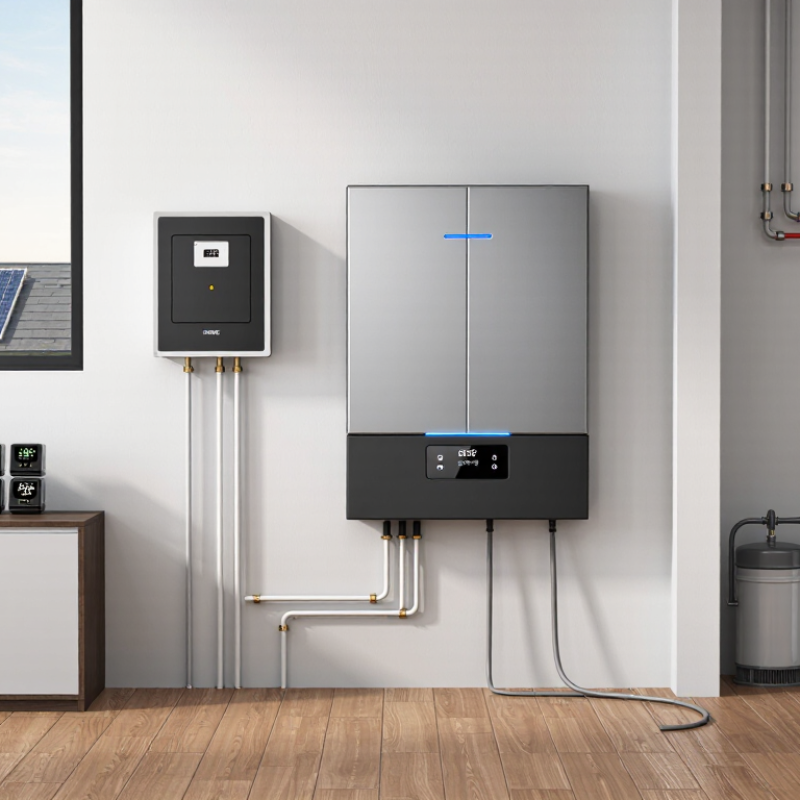
A solar independent power wall stores electricity for homes, workshops, and remote facilities. Its purpose is simple: collect solar energy, store it, and provide power when sunlight disappears. It can support lighting, refrigeration, communication equipment, and essential tools. It should not be treated as an unlimited household supply.
The main components work as one system. Solar panels produce direct current electricity. A charge controller regulates that energy before it reaches the battery. The battery stores power through chemical reactions. A battery management system monitors temperature, voltage, and cell balance. An inverter changes stored direct current into usable alternating current. An enclosure protects these parts from dust, moisture, and accidental contact. Fuses, disconnect switches, grounding, and ventilation also deserve attention.
During a site assessment, I would measure daily energy use rather than guess from appliance labels. A refrigerator may start with a brief surge. A pump can demand even more. My first sizing estimate might still be wrong if cloudy weather lasts several days. That uncertainty matters. Choose usable battery capacity, not only the advertised capacity. Check round-trip efficiency, operating temperature, service access, and emergency shutdown procedures. A clear monitoring display helps reveal unusual consumption early. Installation should follow local electrical codes and be inspected by a qualified professional. Safety is part of performance.
Comparing Battery Capacity, Efficiency, Lifespan, and Safety
How to Choose a Solar Independent Power Wall?
Choosing a solar power wall starts with your daily electricity pattern, not its advertised size. Record evening loads, including lighting, refrigeration, internet equipment, and medical devices. A 10 kWh battery may support essential circuits overnight, but heating or electric cooking can reduce that time sharply. My first estimate was too optimistic because I ignored winter heating demand.
Battery capacity is only part of the decision. Usable capacity shows how much energy the system can safely deliver. Round-trip efficiency indicates how much solar energy remains after charging and discharging. For example, a system rated at 90% efficiency loses more energy than one rated at 95%. These differences become noticeable over hundreds of cycles. Check the warranty’s cycle count, remaining-capacity promise, and operating temperature range.
Safety deserves equal attention. Look for certified battery testing, strong thermal controls, over-current protection, and clear installation requirements. An indoor installation may need ventilation, spacing, and professional inspection, depending on local rules. Lithium iron phosphate chemistry is often chosen for thermal stability, although no battery is risk-free. Lifespan also depends on depth of discharge, heat, charging habits, and maintenance. A larger battery used gently can outlast a smaller battery pushed hard every night. Ask for independent test data, not only laboratory claims. Some specifications remain unclear. That uncertainty deserves a careful question before purchase.
How to Choose a Solar Independent Power Wall? - Comparing Battery Capacity, Efficiency, Lifespan, and Safety
| Battery type | Typical usable capacity per residential unit | Typical round-trip efficiency | Typical cycle life | Service-life considerations | Safety considerations |
| Lithium iron phosphate (LFP) | About 5–20 kWh, depending on system size and configuration | About 90–95% | Approximately 3,000–6,000 cycles under suitable operating conditions | Often designed for roughly 10–15 years; actual life depends on temperature, cycling, and warranty terms | Generally has strong thermal stability compared with nickel-rich lithium-ion chemistries. Certified installation and battery-management protections remain essential. |
| Nickel manganese cobalt (NMC) lithium-ion | About 5–20 kWh, depending on system size and configuration | About 90–95% | Approximately 2,000–4,000 cycles under suitable operating conditions | Often designed for roughly 10–15 years; usable capacity gradually declines with age and use | Higher energy density, but greater sensitivity to heat and thermal runaway risk than LFP. Enclosure, monitoring, and certified controls are important. |
| Lead-acid (deep-cycle) | About 2–10 kWh per bank; more capacity may be added by connecting batteries | About 70–85% | Approximately 500–1,500 cycles, depending on depth of discharge and battery design | Often around 3–8 years in solar use; frequent deep discharging can shorten service life | Flooded types may release hydrogen and require ventilation and maintenance. Sealed types still need correct charging and temperature control. |
| Sodium-ion | Product-dependent; residential availability and standard unit sizes are still developing | Typically around 85–92% in early commercial systems; check independently documented product specifications | Varies by product; published figures are not yet as consistent as for established lithium-ion systems | Long-term field data is limited, so compare the stated warranty and capacity-retention guarantee carefully | Some sodium-ion designs offer favorable thermal characteristics, but safety depends on the specific cell, pack design, and certification. |
How to compare: These are broad technology-level ranges, not guarantees for a particular product. Check usable—not just nominal—capacity, continuous and peak power, warranted energy throughput, operating-temperature limits, and applicable safety certifications. Round-trip efficiency and cycle life vary with system design, settings, and test conditions.
Checking Compatibility, Installation Requirements, and Maintenance
Choosing a solar independent power wall begins with compatibility, not appearance. Check the battery’s voltage range against the inverter and solar controller. Confirm usable capacity, continuous current, and short-term peak output. Communication ports also matter. Some systems require CAN or RS485 data links for safe charging and accurate monitoring. A battery may power a load electrically, yet fail to communicate correctly with the control system.
Installation conditions deserve equal attention. Mount the unit on a solid, level surface in a dry, ventilated area. Keep clear space around it for cooling and emergency access. Confirm wall strength, cable length, grounding, isolation switches, and local electrical requirements before work begins. A qualified electrician should verify the circuit and protection devices. In practice, a neat cable route can still conceal poor airflow or an undersized breaker. That mistake is easy to miss.
Maintenance should be simple, but never ignored. Review charge levels, temperature readings, and warning logs each month. Inspect terminals for looseness, corrosion, or heat marks. Keep vents clean and update system software only through approved procedures. Test backup performance occasionally, especially before storm seasons. Do not wait for a blackout. My checklist has changed after seeing healthy-looking batteries lose capacity early. Real conditions, including heat, dust, and frequent deep discharge, can shorten service life. Some estimates remain uncertain, so leave capacity margin instead of sizing the system at its limit.
Evaluating Costs, Warranties, Certifications, and Long-Term Value
Choosing a solar independent power wall means comparing the usable energy you can draw, not just the headline capacity. Check the warranty’s retained-capacity guarantee, years of coverage, and throughput limit. A ten-year term sounds reassuring, but daily cycling may reach a throughput cap sooner. Ask for the warranty document, not a sales summary. Also confirm whether labor, shipping, and replacement are included. Small details matter when a heavy battery sits in a garage or utility room.
Compare installed cost with the energy you expect to use over the system’s life. IRENA’s Renewable Power Generation Costs in 2023 reports that battery storage project costs fell 89% between 2010 and 2023. That broad trend is useful context, but it does not predict your local quote or household savings. Installation, electrical upgrades, and usable capacity change the calculation. Seek a written estimate that separates equipment from labor. Then compare cost per usable kilowatt-hour, including likely replacement expenses.
Certifications are practical safeguards, not decoration. Look for applicable safety listings, such as UL 9540 for energy storage systems, and verify the exact model and configuration in the certifier’s records. Check whether the unit is rated for the temperature, humidity, and installation location it will face. A garage can swing from cold mornings to hot afternoons. Ask how performance changes outside the stated operating range. I would not choose on price alone; I have seen attractive figures conceal limits on backup power or warranty coverage. And those limits are easy to miss.