



How to Choose a Wok Induction Hob for Your Business?

Choosing the right Wok Induction Hob can shape your kitchen’s speed, safety, and daily operating costs. A busy restaurant needs more than strong heating power. It needs stable temperature control, durable construction, simple cleaning, and reliable service support. During lunch service, a responsive hob can bring a carbon-steel wok to working heat within moments. A weak unit may create uneven cooking, longer queues, and frustrated staff.

This guide explains the practical points business owners should examine before purchasing. These include power ratings, pan compatibility, countertop space, heat distribution, controls, ventilation, and expected workload. A small takeaway kitchen may need a compact single-burner model. A high-volume restaurant may require multiple units with water-resistant controls and reinforced surfaces. Manufacturer specifications matter, but they should not be accepted without testing. Ask for demonstrations, warranty details, spare-part availability, and installation guidance from qualified professionals.

There is no perfect specification. A higher wattage does not automatically mean better performance. It can increase energy demand and require stronger electrical capacity. Lower purchase prices can also hide maintenance costs. That assumption deserves testing. Speak with operators who use similar equipment, and check the hob during realistic service conditions. Observe how quickly it responds, how easily staff adjust heat, and whether the surface remains manageable after repeated cooking. The best Wok Induction Hob is not simply the most powerful option. It is the model that fits your menu, workflow, kitchen infrastructure, and long-term business plans.
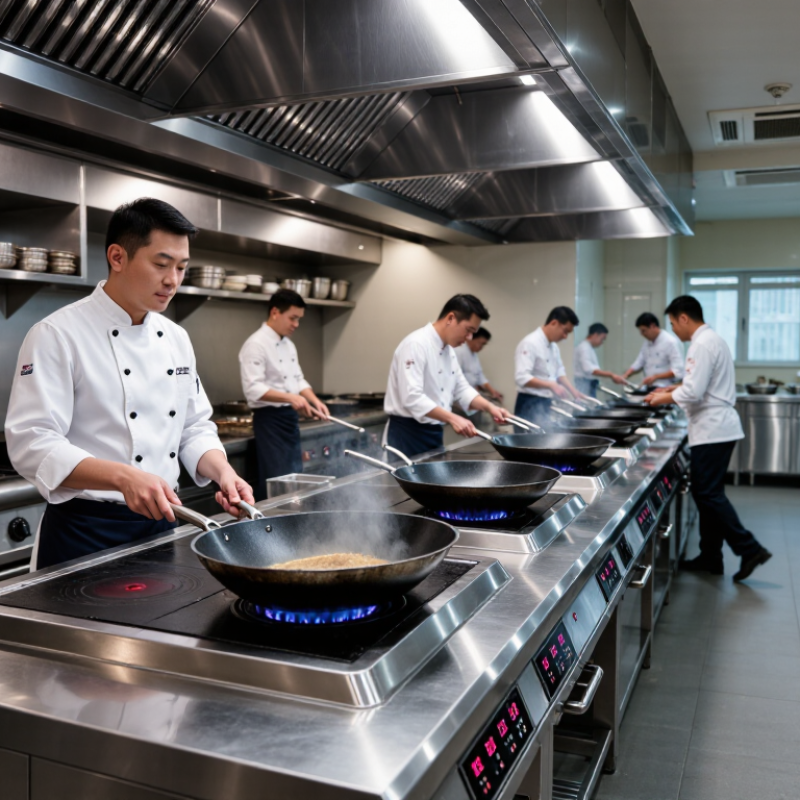
How to Choose a Wok Induction Hob for Your Business?

Understanding Wok Induction Hob Types and Commercial Applications

Choosing a wok induction hob starts with its type and cooking role. Countertop single-zone units suit food trucks, cooking demonstrations, and small kitchens. They are portable, but cables and limited power can slow busy service. Built-in modular hobs fit restaurants and hotel kitchens. Multi-zone systems support several woks, while dedicated commercial wok stations offer stronger heat recovery and deeper pan support.

Commercial applications demand more than maximum wattage. Check the rated input, pan diameter, control response, ventilation plan, and electrical capacity. A shallow glass surface cleans quickly after sauce splashes. A recessed design supports round-bottom or flat-bottom woks more securely. Flat-bottom cookware usually provides better sensor contact. Staff training still matters. Fast controls can create scorched garlic in seconds.

The U.S. Department of Energy reports that induction transfers energy directly into cookware, reducing wasted heat around the pan. Its appliance guidance also notes that induction can be about three times more efficient than gas cooking. These figures describe controlled conditions, not every busy kitchen. Poor pan contact, overloaded circuits, and careless settings may reduce real performance. ASHRAE’s Handbook—HVAC Applications links cooking equipment duty with ventilation design, so hood capture should be checked before installation. A practical choice balances energy use, service speed, cleaning time, and repair access. No configuration is perfect.

Assessing Power, Capacity, and Heating Performance

Choosing a wok induction hob for a business starts with power, capacity, and heating performance. In a busy kitchen, a low-power unit may struggle during peak service. Look for a commercial model with enough output for rapid boiling, stir-frying, and repeated cooking cycles. A power range of 3.5 to 5 kilowatts suits many professional stations, but your electrical supply must support it safely.

Capacity affects workflow. A wider cooking zone can handle larger woks and more ingredients without crowding. Check the recommended pan diameter, countertop space, and ventilation requirements. A hob that accepts only a small wok may slow down portion production. It happens. I once underestimated how quickly sauce and vegetables fill a pan during service. The cooking area seemed adequate in testing, but not in real use.

Heating performance is more than maximum wattage. Choose responsive controls that change temperature quickly and steadily. Even heat distribution helps prevent burnt edges and undercooked centers. Test the hob with a loaded wok, not an empty pan. Observe recovery time after adding chilled ingredients. A strong unit should regain heat without excessive cycling. Temperature sensors, overheat protection, and clear power displays also support consistent operation. However, advertised figures do not always reflect kitchen conditions. Pan material, ingredient volume, and operator technique can change results. Ask for technical data, verify local installation requirements, and allow a practical trial before committing.

Checking Cookware Compatibility and Temperature Control

Choosing a wok induction hob for a business starts with cookware compatibility. Not every wok works with induction heating. The base must contain magnetic metal and sit firmly on the cooking surface. A flat-bottomed wok usually transfers heat more reliably than a traditional round-bottomed model.

Test cookware before purchase. Place a small magnet against the wok base. If it sticks strongly, the material may be suitable. Check the diameter too. A narrow base can heat unevenly, leaving vegetables crisp in some areas and soft in others. In a busy kitchen, that inconsistency quickly affects service quality. I once assumed a heavy steel wok would perform well, but its curved base created unstable contact. That mistake changed my testing process.

Temperature control matters just as much. Look for clear power steps, rapid heat response, and stable low-temperature settings. High heat sears quickly, while lower heat protects sauces from scorching. Try adjusting the controls with one hand while holding a spatula. The interface should remain readable through steam and cooking splashes. Precise control is more valuable than impressive maximum power.

Tips: Test the hob with your actual wok, oil, and typical ingredients. Observe heat recovery after adding cold vegetables. Check whether the handle stays comfortable during repeated cooking. Record results from several tests, not one successful trial. Small differences become obvious during a long service. Also, leave space around the hob for ventilation and safe cleaning.

How to Choose a Wok Induction Hob for Your Business? - Checking Cookware Compatibility and Temperature Control

Selection Criterion Light-Duty Countertop Use Standard Commercial Kitchen High-Volume Wok Cooking What to Check Before Purchase
Recommended Cooking Load Occasional service, demonstrations, small cafés, and food stalls Regular lunch and dinner service with several wok dishes Continuous cooking during peak periods and high-order-volume operations Match the hob to the number of dishes cooked per hour, not only to the maximum pan size
Typical Rated Power 1.8–2.2 kW 2.8–3.5 kW 3.5–5.0 kW Higher power generally improves heat recovery after adding cold ingredients, but it may require a dedicated circuit
Electrical Supply 220–240 V, single phase; approximately 8–10 A at 2.2 kW 220–240 V, single phase; approximately 13–16 A at 3.5 kW 220–240 V, single or three phase depending on the unit; up to approximately 22 A at 5.0 kW on single phase Confirm local voltage, plug type, circuit rating, breaker capacity, and ventilation requirements with a qualified electrician
Compatible Wok and Pan Materials Magnetic stainless steel, cast iron, and carbon steel with a magnetic base Magnetic stainless steel, cast iron, and carbon steel with a stable flat contact area Commercial-grade magnetic steel or cast iron cookware designed for induction use Use a magnet test: the magnet should attach firmly to the cooking surface or base of the pan
Cookware Shape Best with flat-bottom cookware; rounded woks may not heat evenly Flat-bottom wok preferred; a compatible concave-wok adapter may be required for round-bottom cookware Use the manufacturer-approved wok ring or adapter only if it preserves safe coil-to-pan coupling Do not place a round-bottom wok directly on a flat glass surface unless the hob is specifically designed for it
Practical Wok Diameter Approximately 24–30 cm Approximately 28–36 cm Approximately 32–40 cm, subject to the induction zone and pan weight limit The pan base, rather than the rim diameter, should fit the marked heating zone for efficient energy transfer
Usable Temperature Range Approximately 60–240°C surface or pan-sensor setting Approximately 60–280°C with multiple heat levels Approximately 60–300°C or higher on high-power commercial systems Ask whether the displayed value is a target temperature, sensor temperature, or a power-level equivalent
Temperature Control Basic power steps or rotary control; suitable for boiling and light stir-frying Fine digital or rotary adjustment with at least 10–20 power or temperature steps Rapid-response control with low-power simmering and high-power boost capability Choose a unit that can reduce heat quickly; residual heat in a wok can continue cooking delicate ingredients
Heat Response and Recovery Moderate response; recovery may be slower after adding large amounts of food Fast response for standard batch sizes and repeated stir-frying Very fast recovery, especially when cooking chilled meat, vegetables, or sauces in succession Test recovery with the intended pan, oil quantity, and food load rather than relying only on the wattage rating
Low-Heat Stability May cycle on and off at very low settings Generally suitable for sauces, steaming, and holding at low heat Should provide stable low-power operation without frequent scorching or temperature surges Check performance below approximately 100°C if the menu includes sauces, braising, or chocolate-based preparations
Surface and Construction Glass-ceramic surface; wipe-clean design Reinforced glass-ceramic or stainless-steel commercial housing Heavy-duty housing, sealed controls, reinforced cooking surface, and serviceable internal components Look for a smooth surface, protected control panel, non-slip feet, and construction suited to spills and frequent cleaning
Safety Features Pan detection, overheat protection, residual-heat indicator, and automatic shut-off All light-duty features plus fault codes, timer control, and temperature limiting Commercial over-temperature protection, robust cooling, lockable controls, and automatic fault shutdown Verify that the hob stops heating when the pan is removed and does not restart unexpectedly
Cleaning and Hygiene Easy to clean, but controls may be more exposed to spills Designed for frequent wipe-downs and routine commercial cleaning Sealed or protected controls and edges that minimize grease and food accumulation Check whether the unit can tolerate the cleaning chemicals and procedures used in your kitchen
Best Choice for Business Suitable when cooking volume is low and cookware is compatible Prioritize cookware compatibility, temperature control, serviceability, and electrical safety over maximum advertised power

Practical selection rule: Before installation, test the actual wok on the intended hob. Confirm that the pan is magnetic, sits securely over the induction zone, heats evenly across the base, and reaches the required cooking temperature without unstable cycling.

Comparing Safety Features, Energy Use, and Installation Needs

How to Choose a Wok Induction Hob for Your Business?

In a busy kitchen, safety should guide the purchase. Choose a hob with pan detection, overheat protection, and automatic shutoff. These features reduce risks when a wok is removed or left unattended. A stable cooking surface also matters. A heavy wok can shift during rapid stirring. Check whether the unit provides clear heat indicators, cool-touch controls, and easy cleaning around the control panel. In practical kitchen use, simple controls often prevent more mistakes than advanced settings.

Energy use deserves careful testing. Induction transfers heat directly into compatible cookware, so less heat escapes into the room. This can improve comfort during long service periods. Ask for measured power ratings, standby consumption, and adjustable heating levels. A lower maximum rating may save energy, but it could slow peak-hour cooking. My early assumption was that maximum wattage always meant better performance. It did not. The right balance depends on menu volume, wok size, and service speed.

Tips: Confirm the kitchen’s electrical capacity before ordering. A qualified electrician should inspect the circuit, ventilation, clearances, and socket position. Leave enough space for cleaning and maintenance access. Test the hob with your actual wok, not only a showroom sample. Record cooking times and energy readings during a normal service. Small details matter. One overlooked issue is noise from cooling fans, which may affect an open kitchen. Recheck the choice after a real trial.

Evaluating Cleaning, Durability, Cost, and Supplier Support

In a busy commercial kitchen, cleaning speed affects labor, hygiene, and service continuity. Choose a wok induction hob with a smooth stainless-steel surface and sealed controls. These features reduce grease traps around buttons and edges. Removable drip areas also help staff clean spilled sauce quickly. Small gaps matter. Ask suppliers for cleaning instructions, approved products, and replacement-part details before ordering.

Durability depends on more than advertised power. Check the hob’s duty rating, cooling system, pan detection, and protection against overheating. A stable, thick cooking surface should handle repeated heating without obvious movement or warping. In my experience, poorly positioned controls suffer from impact and liquid damage. That mistake was costly. Leave enough counter space around the unit, and confirm that the electrical supply matches the required output.

Compare the purchase price with energy use, maintenance, downtime, and installation costs. A cheaper hob may become expensive when a control board takes weeks to replace. Request written warranty terms, response times, service coverage, and training support. Reliable suppliers explain technical limits clearly instead of promising unlimited performance. Speak with kitchens using similar workloads, if possible. Their repair history may reveal more than a sales specification. I also prefer suppliers that keep common parts available locally, although this is not always easy to verify.

Whether your solution requires a single pumping application or an expansive engineered system,
CheckPoint is committed to becoming your partner in excellence.