


How to Choose the Right Chemical Metering Pump for Your Needs?

Choosing the right chemical metering pump can be daunting. With various options on the market, understanding your specific needs is essential. Dr. Emily Stevens, a leading expert in pump technology, emphasizes, "Selecting the correct pump is critical for system efficiency." Her insight highlights the necessity of making informed choices.

Chemical metering pumps play a vital role in industries such as water treatment, agriculture, and manufacturing. Each application has unique requirements, making it crucial to consider factors like flow rate, pressure, and chemical compatibility. Ignoring these details can lead to inefficiencies and costly errors.

It's important to reflect on your actual needs. For instance, a pump that works perfectly in one scenario might fail in another. Always ask questions and seek expert advice when unsure. Investing time to select the right chemical metering pump is an investment in your system's success.

How to Choose the Right Chemical Metering Pump for Your Needs?

Factors to Consider When Selecting a Chemical Metering Pump

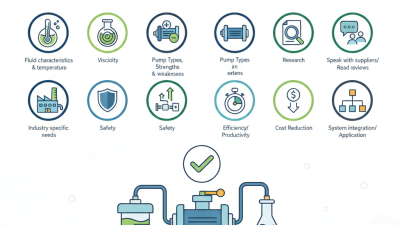
Selecting the right chemical metering pump requires careful consideration of various factors. One of the primary factors is the type of chemicals being pumped. Different chemicals have unique properties. For instance, corrosive substances may require special materials for the pump construction to prevent degradation. Furthermore, viscosity matters. Thicker fluids may demand more powerful pumps. Understanding the properties of your specific chemicals can guide your choice effectively.

Flow rate is another crucial factor. The pump must meet the required flow rate for your application. Calculate the necessary output to ensure efficiency. Additionally, pressure requirements can impact your decision. A pump with the right pressure rating will enhance system performance.

Tips: Always assess the compatibility of the pump materials with your chemicals. This can save costly repairs. Consider the environment where the pump will operate. Compatibility with ambient conditions can affect pump longevity. Don't overlook maintenance needs—some pumps require regular service, while others are more user-friendly. Reflect on these aspects to avoid future issues.

How to Choose the Right Chemical Metering Pump for Your Needs? - Factors to Consider When Selecting a Chemical Metering Pump

Factor Description Importance Level
Flow Rate The amount of chemical to be pumped over a specified time period High
Chemical Compatibility Ensure the pump materials can withstand the chemicals being used Critical
Pressure Requirements Determine the pressure needed to pump the chemicals effectively Medium
Operating Environment Consider temperature, humidity, and exposure to elements Medium
Pump Type Select between diaphragm, peristaltic, or gear pumps based on application High
Cost Consider both initial cost and long-term operational costs High
Maintenance Requirements Evaluate how much maintenance is required and its frequency Medium
Safety Features Look for features that enhance operation safety Critical

Types of Chemical Metering Pumps and Their Applications

How to Choose the Right Chemical Metering Pump for Your Needs?

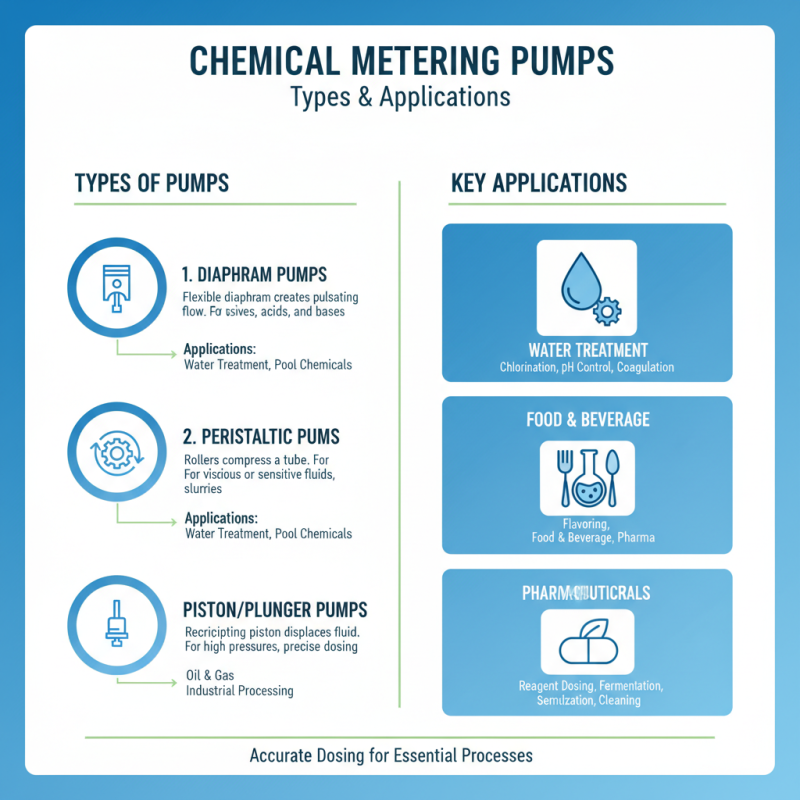
Chemical metering pumps are essential in various industries. They ensure accurate dosing of chemicals, making them vital for processes such as water treatment, food production, and pharmaceuticals. Understanding the types and applications of these pumps is crucial for selecting the right one.

There are several types of chemical metering pumps, including diaphragm, peristaltic, and gear pumps. Diaphragm pumps are known for their ability to handle corrosive fluids. They offer precise flow rates but can be prone to wear over time. Peristaltic pumps are versatile and ideal for shear-sensitive fluids. However, they may require more frequent maintenance. Gear pumps are effective for high-pressure applications but might not be suitable for all chemical types.

When choosing a pump, consider the specific application and fluid characteristics. Is it abrasive? What is the viscosity? Often, the best option may not seem perfect at first glance. You might overlook maintenance needs or compatibility issues. Each pump type has strengths and weaknesses that require careful evaluation. Balancing performance and reliability is essential for long-term success.

Understanding Flow Rate and Pressure Requirements

When choosing a chemical metering pump, understanding flow rate and pressure requirements is crucial. Flow rate is typically measured in gallons per minute (GPM) or liters per hour (LPH). The specific needs depend on your system's demands. For example, if you're dealing with a large-scale industrial process, you might require a pump capable of delivering high flow rates. According to the Hydraulic Institute's 2020 study, an efficient selection can lead to energy savings of up to 30%.

Pressure is another critical aspect. As processes often involve varying back pressures, ensure the selected metering pump can handle these fluctuations. Many pumps have a maximum pressure rating, which must exceed the potential back pressure of your system. Research indicates that systems operating at high pressures—over 150 psi—can lead to premature pump failure if the equipment is not correctly matched to the application. It's essential to assess the relationship between pressure and flow to avoid operational inefficiencies.

Choosing the right pump is not just about specifications. Installation and maintenance also play key roles in performance. An improperly installed pump can underperform regardless of its rated specifications. A survey by the American Process Safety Management Association highlighted that over 25% of pump failures stem from installation errors. Be mindful of these factors. They significantly impact overall system reliability.

Evaluating Chemical Compatibility and Material Selection

How to Choose the Right Chemical Metering Pump for Your Needs?

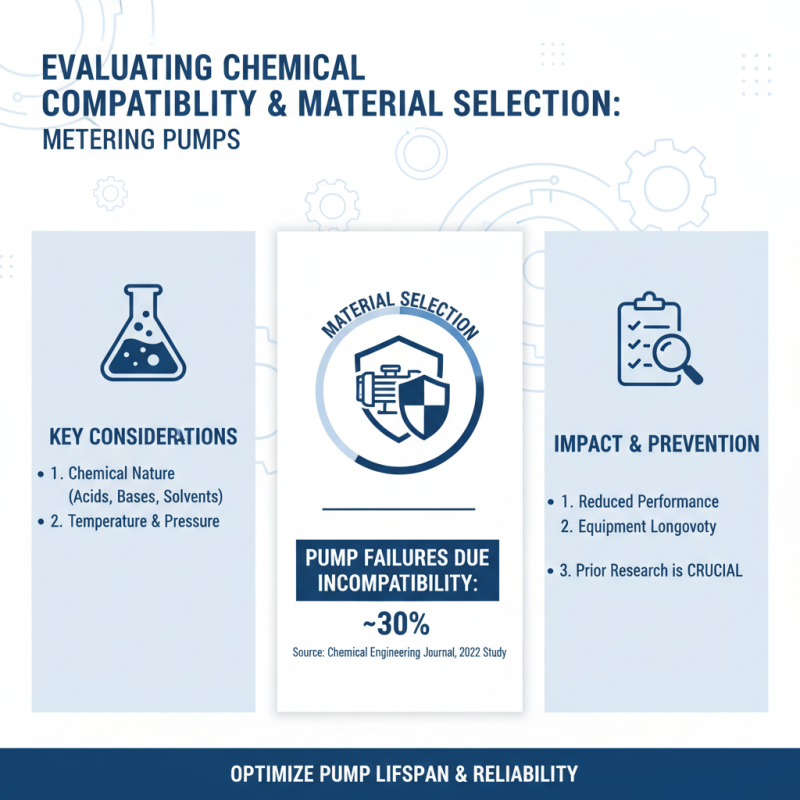
Selecting the right chemical metering pump demands careful consideration of chemical compatibility. Each application has specific requirements that can significantly affect performance and longevity. According to a 2022 study by the Chemical Engineering Journal, nearly 30% of pump failures stem from material incompatibility with the chemicals being pumped. This emphasizes the importance of thorough research prior to selection.

Materials used in pump construction must withstand the corrosive nature of certain chemicals. For example, fluoropolymer and polypropylene are common choices for corrosive fluids. However, recent data indicates that even slight variations in chemical formulations can lead to unexpected reactions. If a pump is incompatible, it can degrade quickly, resulting in costly downtime.

Additionally, differing temperature ranges can affect material performance. The U.S. Department of Energy recommends assessing both the chemical properties and operating conditions carefully. This can prevent premature wear. Choosing the wrong material may not seem like a significant issue, but it can lead to serious operational challenges. Striking a balance between initial cost and long-term reliability is crucial in many industries.

Cost-Effectiveness and Maintenance Considerations

Choosing the right chemical metering pump goes beyond just functionality. Cost-effectiveness is crucial. An affordable initial purchase price does not always mean long-term savings. Consider energy consumption and operational efficiency when assessing costs. A pump that uses less power may have a higher upfront cost, but it can save significant money over time.

Maintenance is another critical aspect. Regular upkeep can prevent breakdowns and prolong the lifespan of your pump. Skipping maintenance might seem like a good way to save money initially, but it often leads to larger expenses down the road. Think about the availability of spare parts and service support too. If parts are hard to find, repairs can become costly and time-consuming.

Moreover, reliability is essential. A cheaper pump may break down more frequently, disrupting operations. An unreliable pump could lead to lost productivity and ultimately cost more. Assess the trade-offs carefully. Consider the implications of your choice, not just the price tag. These factors play a vital role in ensuring your investment remains sound over time.

Whether your solution requires a single pumping application or an expansive engineered system,
CheckPoint is committed to becoming your partner in excellence.