



Choosing a Recycling Baler Machine in 2026 requires more than comparing prices and motor power. Recycling facilities handle cardboard, plastic film, textiles, and mixed packaging every day. Each material behaves differently inside a baling chamber. A machine that compresses dry cardboard efficiently may struggle with slippery plastic film. This difference affects bale density, storage space, transport costs, and workplace safety.
Real operating experience matters. Watch how operators load the chamber, tie finished bales, and clear occasional blockages. A practical machine should fit your floor space and daily workflow. Check its feeding opening, cycle time, bale weight, and power requirements. Do not rely only on catalogue figures. Rated capacity can change when materials contain moisture, labels, or loose contamination. The strongest specification may not deliver the best result on your site.
Reliable selection also depends on supplier support. Ask about installation, operator training, spare parts, maintenance schedules, and response times. Examine safety guards, emergency stops, interlocks, and access points before purchase. Request performance references from facilities processing similar materials. A short trial with your own feedstock can reveal problems that brochures hide. It may expose noise, uneven compression, or difficult tying.
There is no perfect baler.
The right Recycling Baler Machine should support safe work, consistent bale quality, and realistic operating costs. This guide examines the key factors for making a confident decision in 2026. It also considers common mistakes, because an efficient machine can still disappoint when matched poorly with materials, staffing, or available space.
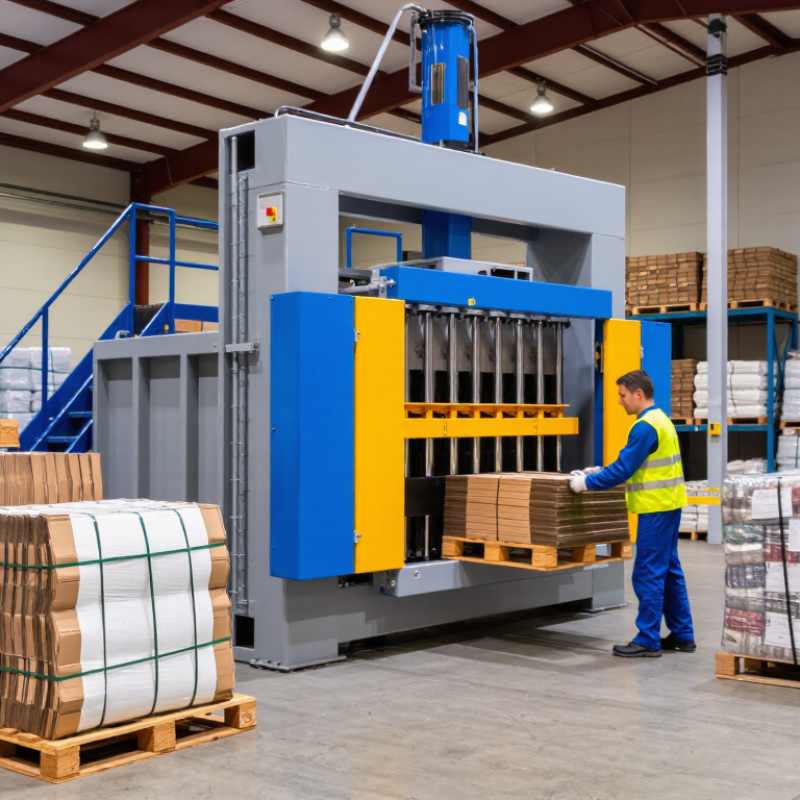
How to Choose a Recycling Baler Machine in 2026?
Define your recycling needs before comparing machines. Measure daily material volume, peak loads, available floor space, and labor capacity. A small warehouse may need a compact vertical baler, while a busy sorting facility may require a high-throughput horizontal model. Record loose material volume for one week. Guessing here can create costly overcapacity or constant delays.
Material type changes the machine specification. Cardboard needs strong compression and reliable bale tying. Plastic film may require controlled feeding and careful pressure adjustment. Cans, textiles, and mixed packaging have different densities and expansion behavior. Check moisture, contamination, bale weight, and preferred bale dimensions. Wet cardboard can overload components and produce unstable bales. A perfect specification rarely exists; real waste streams change during holidays, weather shifts, and seasonal production.
Tips: Ask operators to test representative materials, not clean samples alone. Watch feeding effort, noise, cycle time, and bale shape. Confirm motor power, chamber size, maintenance access, and safety controls. Keep several sample bales for transport and storage trials. It is easy to focus on purchase price and overlook wiring, strapping, training, or downtime. Recheck your estimates after two weeks of operation. You may find that your original assumptions were wrong.
| Material Type | Typical Feed Characteristics | Recommended Baler Configuration | Typical Bale Density | Typical Bale Weight | Suggested Throughput Range | Key Selection Factors | Common Tie Method |
|---|---|---|---|---|---|---|---|
| Cardboard and OCC | Flattened cartons, corrugated sheets, and mixed paperboard; generally dry and compressible. | Horizontal automatic or semi-automatic baler for medium-to-high daily volumes. | Approximately 350–650 kg/m³ | 30–500 kg | 1–8 tonnes/hour | Feed opening, bale size, dust control, conveyor integration, and storage space. | PET strapSteel wire |
| Mixed Paper | Newspapers, office paper, magazines, and lightweight printed materials with variable moisture. | Closed-door horizontal baler with controlled compression and reliable tying. | Approximately 450–750 kg/m³ | 40–600 kg | 0.5–6 tonnes/hour | Material contamination, dust extraction, bale stability, and paper-dust housekeeping. | PET strapSteel wire |
| PET Bottles | Empty post-consumer bottles, usually perforated or pre-crushed to release trapped air. | High-pressure horizontal baler, often paired with a perforator and conveyor. | Approximately 250–450 kg/m³ | 150–450 kg | 1–5 tonnes/hour | Air removal, bottle moisture, feed consistency, bale density, and contamination level. | PET strapSteel wire |
| HDPE and PP Plastics | Rigid containers, caps, crates, and molded plastic items; shapes and bulk density vary widely. | Heavy-duty horizontal baler with a large feed chamber and high compaction force. | Approximately 300–600 kg/m³ | 150–600 kg | 0.8–6 tonnes/hour | Plastic spring-back, sharp edges, feed opening, wear protection, and bale rebound control. | PET strapSteel wire |
| Film and Flexible Packaging | Stretch film, shrink wrap, bags, and agricultural film; light, bulky, and prone to bridging. | Film-capable baler with a pre-compression chamber and controlled feeding system. | Approximately 180–350 kg/m³ | 80–300 kg | 0.3–3 tonnes/hour | Anti-bridging design, film wrapping prevention, moisture, bale expansion, and fire safety. | PET strapWire |
| Aluminum Cans | Empty beverage and food cans; low bulk density unless crushed or compacted before baling. | High-force horizontal baler, frequently supplied with a can flattener or pre-compactor. | Approximately 500–900 kg/m³ | 150–500 kg | 1–8 tonnes/hour | Pre-crushing, oil or liquid residue, chamber wear, bale density, and metal handling logistics. | Steel wireMetal strap |
| Steel Cans and Light Scrap | Thin-walled cans, light-gauge sheet, and small ferrous items; may contain residual liquids. | Heavy-duty metal baler designed for abrasive and high-resistance feedstock. | Approximately 600–1,200 kg/m³ | 200–800 kg | 1–10 tonnes/hour | Wear-resistant chamber, hydraulic force, magnetic separation, noise, and operator protection. | Steel wireMetal strap |
| Textiles | Clothing, fabric offcuts, towels, and nonwoven materials; highly elastic and variable in moisture. | Vertical or horizontal baler with extended compression dwell time and adjustable pressure. | Approximately 250–500 kg/m³ | 50–400 kg | 0.2–3 tonnes/hour | Spring-back, bale wrapping, fire risk, material cleanliness, and required bale dimensions. | Polyester strapWire |
| Tires and Rubber | Whole or cut tires, rubber products, and offcuts; resilient, bulky, and difficult to compact. | Specialized high-force baler with reinforced chamber and abrasion-resistant components. | Approximately 350–650 kg/m³ | 300–1,000 kg | 0.5–4 tonnes/hour | Rubber rebound, chamber dimensions, cutting requirements, fire prevention, and equipment wear. | Steel wireHeavy-duty strap |
| Agricultural Fiber and Straw | Dry straw, hay, stalks, and similar fibrous residues; seasonal and often dusty. | High-throughput baler with dust management and adjustable compression settings. | Approximately 100–250 kg/m³ | 15–500 kg | 1–15 tonnes/hour | Moisture content, dust and fire control, bale handling, seasonal utilization, and storage conditions. | TwinePET strap |
Planning note: The ranges above are typical industry reference values rather than guaranteed machine specifications. Actual performance depends on material moisture, contamination, particle size, feeding method, compression pressure, bale dimensions, operator practice, and local safety requirements.

Whether your solution requires a single pumping application or an expansive engineered system,
CheckPoint is committed to becoming your partner in excellence.