



Choosing chemical pumps in 2026 requires more than matching flow rate and pressure. The process fluid, operating temperature, solids content, and installation environment all influence pump performance. Sulfuric acid may demand corrosion-resistant alloys, while sodium hypochlorite can expose weak seals quickly. Viscous fluids may also require different hydraulic designs. Small errors grow.
Dr. Heinz P. Bloch, a widely cited machinery-reliability authority, offers a useful principle: “Pump reliability begins with the whole system, not the pump alone.” That idea remains highly relevant when selecting chemical pumps. Engineers should examine piping layout, suction conditions, NPSH margin, seal compatibility, motor efficiency, and maintenance access. A pump that looks excellent on a specification sheet may still fail beside a poorly designed suction line. The details matter.
Modern selection also involves digital monitoring, energy consumption, spare-part availability, and lifecycle cost. Sensors can reveal rising vibration, seal leakage, or unusual power demand before a shutdown occurs. Yet technology is not a substitute for sound engineering. We should admit that no pump is perfect. Laboratory data may not fully represent a fluctuating production site. Supplier claims also deserve careful verification through material certificates, test records, and reference installations.
This guide explains how to compare chemical pumps for safer, more reliable, and more economical operation in 2026. It focuses on practical decisions, not fashionable specifications. Performance matters. So does accountability.
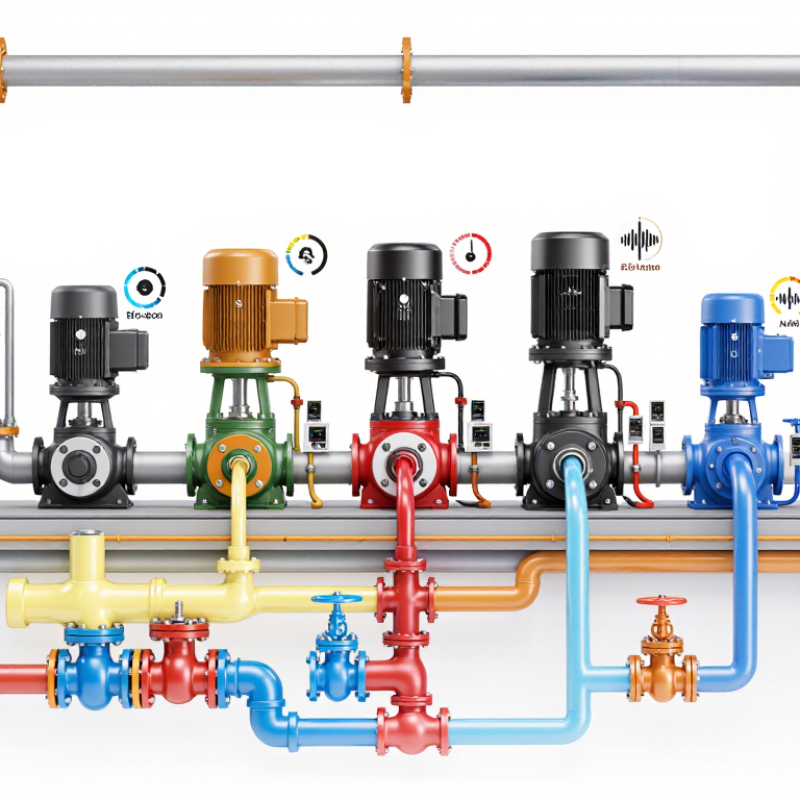
How to Choose Chemical Pumps in 2026?
Chemical pumps move liquids safely, but their differences matter. Centrifugal pumps use rotating impellers to create velocity and pressure. They suit steady flow, low-to-medium viscosity, and longer pipelines. Positive displacement pumps trap a fixed volume, then push it forward. They handle viscous fluids, dosing, and higher pressures more consistently. Diaphragm pumps separate the liquid from moving parts, which helps with corrosive or solids-bearing chemicals.
Material compatibility comes first. Check the chemical concentration, temperature, viscosity, vapor pressure, and suspended solids. A pump handling diluted acid may fail quickly with concentrated acid. Wetted components, seals, valves, and diaphragms need separate checks. I have seen specifications focus on flow rate while ignoring suction conditions. That mistake can cause cavitation, vibration, and damaged impellers.
Energy also deserves attention. The U.S. Department of Energy reports that pumping systems can represent 25% to 50% of industrial electricity use in some facilities. Its Improving Pumping System Performance sourcebook recommends evaluating the complete system, not only the pump. Measure the duty point, pressure losses, control method, and operating hours. Hydraulic Institute guidance also stresses selecting pumps near their best efficiency point. Real systems rarely behave perfectly. A smaller, carefully controlled pump may outperform a larger one running far from its design point. Test the liquid. Record field conditions. Then choose.
| Chemical Pump Type | Operating Principle | Primary Function | Suitable Chemical Service | Flow Characteristics | Pressure Capability | Main Advantages | Important Limitations | Typical Applications |
|---|---|---|---|---|---|---|---|---|
| Centrifugal Pump | A rotating impeller increases fluid velocity, and the casing converts part of that velocity into pressure. | Continuous transfer and circulation of relatively low-viscosity liquids. | AcidsAlkalisSolventsProcess Water | Continuous flow; flow usually changes with system resistance and pump speed. | Moderate to high pressure; multistage designs provide higher pressure than single-stage designs. | Simple construction, smooth flow, high flow capacity, and good energy efficiency near the design point. | Usually requires priming; performance decreases with high viscosity; dry running can damage many designs. | Bulk chemical transfer, cooling circulation, scrubber systems, filtration, and process circulation. |
| Magnetically Driven Centrifugal Pump | Motor torque is transmitted through magnetic coupling rather than a conventional dynamic shaft seal. | Leak-minimized transfer of corrosive, toxic, or environmentally sensitive liquids. | Corrosive ChemicalsToxic LiquidsSolvents | Continuous and relatively smooth flow, similar to a conventional centrifugal pump. | Generally low to moderate pressure, depending on impeller design and materials. | No traditional shaft seal, reduced fugitive emissions, and improved containment. | Sensitive to dry running, solids, excessive temperature, and operation outside the recommended flow range. | Acid circulation, plating systems, laboratory equipment, semiconductor processing, and chemical dosing skids. |
| Diaphragm Metering Pump | A reciprocating diaphragm displaces a controlled volume through check valves during each stroke. | Accurate dosing and proportioning of chemicals. | DisinfectantsAcidsCoagulantsBiocides | Positive-displacement, pulsating flow; output is adjusted by stroke length, stroke speed, or both. | High discharge pressure relative to its flow capacity; the exact limit depends on the model and materials. | Accurate metering, good chemical containment, and suitability for low-flow applications. | Produces pulsation; check valves require proper installation; excessive back pressure can cause malfunction or damage. | Water treatment, pH control, chlorination, boiler treatment, and process additive injection. |
| Peristaltic Pump | Rollers or shoes compress flexible tubing and move liquid through the tube without direct contact with the pump housing. | Gentle transfer and dosing of abrasive, viscous, or shear-sensitive fluids. | SlurriesPolymersSuspensionsSensitive Fluids | Positive-displacement, pulsating flow; speed controls the approximate flow rate. | Low to moderate pressure, limited primarily by tubing material and construction. | Self-priming, reversible, capable of dry running for many designs, and easy to isolate from the drive mechanism. | Tubing wears over time; flow pulsation can be significant; tubing compatibility is critical. | Sludge dosing, abrasive chemical transfer, laboratory handling, printing fluids, and wastewater treatment. |
| Progressive Cavity Pump | A single-helical rotor moves eccentrically inside a double-helical elastomer stator, forming progressing cavities. | Transfer of viscous, abrasive, or solids-containing chemicals at a controlled rate. | High-Viscosity LiquidsSlurriesPolymersPastes | Positive-displacement, low-pulsation flow; flow is broadly proportional to rotational speed. | Moderate to high pressure, often achieved through multiple stages. | Handles high viscosity and suspended solids with relatively smooth flow. | Elastomer compatibility and dry-running protection are essential; stator wear may increase with abrasive service. | Polymer preparation, sludge handling, mineral slurries, adhesives, and viscous process chemicals. |
| Gear Pump | Meshing gears trap liquid and transport it from the inlet to the outlet along the pump casing. | Continuous metering and transfer of viscous liquids. | OilsResinsAdhesivesViscous Chemicals | Positive-displacement, relatively smooth flow; flow is closely related to speed. | Moderate to high pressure, subject to viscosity, clearance, and material selection. | Compact design, reliable metering, and effective handling of many viscous fluids. | Not ideal for abrasive solids; shear and heat generation may affect sensitive products; relief protection is required. | Resin transfer, coating systems, polymer processing, lubricant circulation, and adhesive dosing. |
| Piston or Plunger Pump | A reciprocating piston or plunger changes chamber volume and forces liquid through inlet and outlet valves. | High-pressure chemical injection and precise positive-displacement transfer. | Clean ChemicalsHigh-Pressure DosingCorrosion Inhibitors | Positive-displacement, pulsating flow; flow depends on displacement and reciprocating speed. | High to very high pressure, depending on the pump configuration and materials. | High pressure capability, accurate flow control, and strong performance in demanding injection service. | More mechanical components, potential seal wear, and sensitivity to abrasive or gas-containing fluids. | Pipeline injection, high-pressure process dosing, hydraulic testing, and chemical injection systems. |
| Air-Operated Double-Diaphragm Pump | Compressed air alternately moves two diaphragms, displacing liquid through check valves. | Flexible transfer of chemicals where electrical power, self-priming, or portability is important. | Corrosive LiquidsSlurriesViscous Fluids | Positive-displacement, pulsating flow; flow varies with air pressure, air volume, and discharge resistance. | Moderate pressure, generally limited by available air pressure and diaphragm design. | Self-priming, can run dry for many applications, handles solids, and can be used in hazardous areas when properly configured. | Consumes compressed air, can be noisy, and may have higher pulsation and operating cost than electrically driven pumps. | Drum unloading, chemical transfer, wastewater treatment, spill recovery, and batch processing. |
| Eductor or Jet Pump | A motive fluid passes through a nozzle and creates a low-pressure zone that entrains and moves another fluid. | Mixing, circulation, or transfer without a mechanically driven rotating assembly. | Corrosive LiquidsScrubber LiquidsDilute Solutions | Continuous flow, dependent on motive-fluid pressure and flow rate. | Usually low discharge pressure and relatively low hydraulic efficiency. | No motor, shaft, or mechanical seal; simple construction and low maintenance. | Requires a suitable motive fluid; efficiency is lower than many mechanical pumps; limited control over flow independently. | Tank mixing, gas scrubbing, vapor absorption, chemical dilution, and liquid circulation. |
Selection note: Confirm chemical compatibility for every wetted component, including the casing, impeller or rotor, diaphragm, tubing, elastomers, seals, valves, and fasteners. Final selection should also consider flow rate, discharge pressure, temperature, viscosity, vapor pressure, solids content, hazardous-area requirements, dry-running risk, and required control accuracy.


Whether your solution requires a single pumping application or an expansive engineered system,
CheckPoint is committed to becoming your partner in excellence.