Top 10 Seamless Carbon Steel Pipe Suppliers Worldwide
The global seamless pipe market supports energy, construction, machinery, and demanding industrial projects. World Steel Association data recorded approximately 1.89 billion tonnes of crude steel production in 2023. That scale reflects strong manufacturing capacity, but it does not guarantee dependable pipe quality.
This introduction examines the Top 10 Seamless Carbon Steel Pipe Suppliers Worldwide. The comparison considers manufacturing experience, ASTM and ASME compliance, API certifications, dimensional control, testing systems, export capability, and delivery consistency. Quality evidence matters. Mill test certificates, heat numbers, hydrostatic testing, and ultrasonic inspection can reveal more than a polished website. The OECD Steel Outlook also highlights continuing pressure from overcapacity, energy costs, and changing industrial demand. Buyers should therefore examine both technical performance and commercial resilience.
“Steel is at the heart of modern life,” says Edwin Basson, Director General of the World Steel Association. His statement explains why supplier selection deserves careful attention. A reliable Seamless Carbon Steel Pipe Supplier should provide traceable materials, stable production, responsive engineering support, and clear documentation. Small details matter.
No ranking is flawless. A large producer may not offer the best lead time for every region. A smaller mill may provide stronger communication or more flexible production. This list uses available industry data, supplier information, technical credentials, and practical purchasing considerations. Readers should still verify current certificates, factory capabilities, and project references before placing an order. That final check is easy to overlook. It should not be.
Global Scope: API 5L, ISO 3183, and Seamless Pipe Applications
Global demand keeps seamless carbon steel pipe central to energy infrastructure. The Energy Institute’s Statistical Review 2024 reported oil consumption near 102 million barrels per day in 2023. Gas networks, refineries, and transmission lines therefore require consistent strength under pressure. A supplier’s global reach matters, but technical control matters more.
API 5L API 5L defines requirements for line pipe used in oil and gas transportation. ISO 3183 provides an internationally aligned framework for petroleum and natural gas pipeline products. These standards address dimensions, steel grades, testing, traceability, and inspection. However, compliance should never be accepted from a brochure alone. Request material certificates, heat numbers, hydrostatic test records, and independent inspection evidence. Small gaps can become expensive field problems.
Seamless pipe is often selected where welded seams may create operational concerns, including high-pressure headers, downhole components, and demanding process lines. The International Energy Agency’s World Energy Investment 2024 estimated global energy investment would reach about 3 trillion dollars, supporting continued infrastructure activity. Yet demand does not excuse weak verification. Wall thickness can vary. Ovality can be overlooked. One supplier may offer attractive pricing but poor documentation. Experienced buyers compare mill capability, furnace control, non-destructive testing, and delivery history. No supplier is perfect. That is the uncomfortable part. A reliable shortlist should include evidence from actual projects, not polished claims.
Top 10 Suppliers: Tenaris, Vallourec, Nippon Steel, and Jindal SAW
The global seamless carbon steel pipe market is led by ten established suppliers across Europe and Asia. Four names often receive special attention: a major Italian producer, a French specialist, a Japanese steelmaker, and an Indian manufacturer. Their strengths differ in mill capacity, heat treatment, inspection depth, and project support.
Reliable suppliers should provide traceable certificates, controlled chemistry, and consistent wall thickness. Buyers should check standards such as ASTM, ASME, API, or EN requirements before ordering. Pipe performance also depends on outside diameter, pressure rating, steel grade, and end finish. In field procurement, small dimensional errors can create costly alignment problems. No ranking is perfect. Delivery performance may change with location, order size, and raw material conditions.
Tips: Request recent test certificates, mill inspection records, and sample documentation. Compare lead times, not only unit prices. Ask how the supplier manages ultrasonic testing, coating preparation, and nonconforming products. A factory visit can reveal practical details that brochures often miss. Keep a written inspection plan. It protects both sides.
Product Benchmark: ASTM A106, ASTM A53, API 5CT, Sizes, and Wall Thickness
A serious comparison of ten global seamless carbon steel pipe suppliers should begin with standards, not glossy catalogs. ASTM A106 is commonly selected for seamless pipe carrying fluids at elevated temperatures. ASTM A53 covers general-purpose pressure and structural applications, in seamless and welded forms. API 5CT serves oil and gas casing and tubing, with grade and connection requirements that differ from process piping. These standards are not interchangeable.
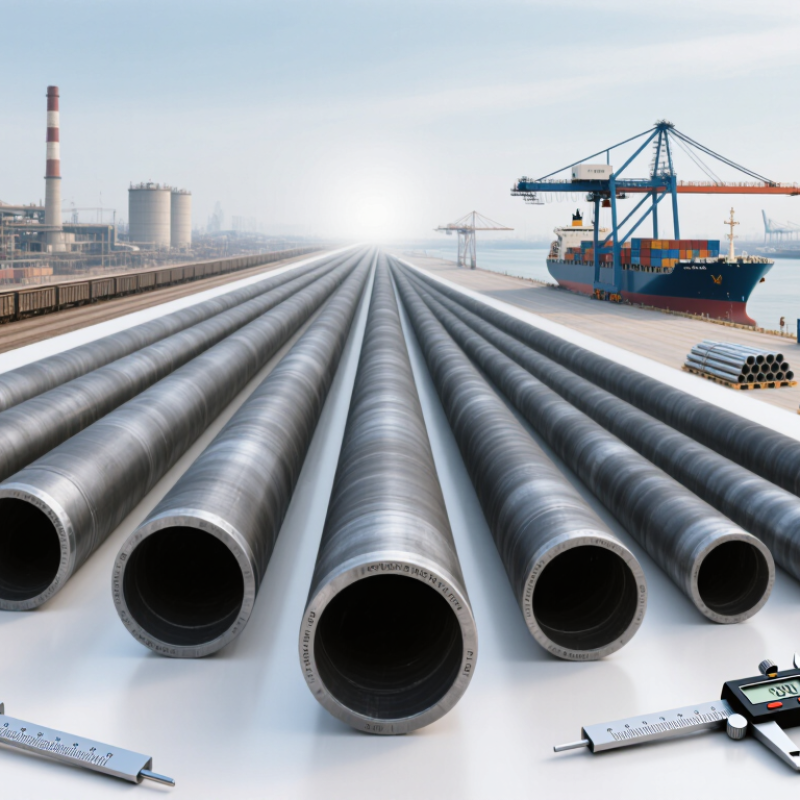
Size and wall thickness need equal attention. Buyers should verify nominal pipe size, outside diameter, schedule, and actual wall tolerance. A pipe marked “6 inches” may still require precise dimensional review. Heavy-wall sections can improve pressure resistance, but they also increase weight, welding effort, and handling cost. Suppliers should provide heat numbers, chemical analysis, mechanical results, and dimensional records. Mill test certificates matter.
Quality appears in the details.
For each supplier, request sample inspection data, hydrostatic testing procedures, nondestructive examination methods, and traceability controls. Third-party inspection can strengthen confidence, especially for large shipments. I would also check packaging, end protection, and delivery consistency; these practical issues are often ignored. No benchmark is perfect. Catalog language may look precise while tolerance data remains incomplete. That is where careful questioning becomes necessary. A dependable supplier explains deviations clearly and matches the selected standard to the service conditions, not merely to the purchase order.
Supplier Comparison: Production Regions, Industries Served, and Lead Times
Comparing the top seamless carbon steel pipe suppliers requires more than checking annual output. Production regions influence material availability, inspection access, freight routes, and response speed. Large manufacturing clusters in China and India often support high-volume orders for construction, water systems, and energy projects. European producers commonly serve demanding engineering, process, and pressure applications. Suppliers in Japan, South Korea, and Türkiye may offer strong process control and useful access to regional markets.
Lead times can change sharply by pipe grade, outside diameter, wall thickness, and order quantity. Standard sizes may leave the mill within four to eight weeks. Special heat treatment, threaded ends, or third-party inspection can extend this period by several weeks. Ocean freight adds another variable, especially when ports are congested. A reliable comparison should separate production time from transport time. Otherwise, the estimate looks better than reality.
Industry fit matters as much as location. Oil and gas projects may require traceable heat numbers, hydrostatic testing, and strict dimensional records. Structural contractors usually prioritize consistent lengths, weldability, and delivery volume. Chemical plants often need tighter documentation and corrosion-related specifications. Buyers should request recent mill certificates, inspection procedures, sample test reports, and a written lead-time schedule. Regional rankings can mislead. A lower quoted price may hide slower testing, limited stock, or costly inland transport. One practical weakness remains: supplier data is not always updated, so every comparison should be checked against current production capacity and shipping conditions.
Seamless Carbon Steel Pipe Supplier Comparison
Indicative export lead times by major production region. Ranges reflect commonly quoted manufacturing, inspection, and export preparation periods for standard seamless carbon steel pipe orders; custom specifications and urgent production may require longer schedules.
Typical industries served: oil and gas, petrochemical processing, power generation, construction, mechanical engineering, and water infrastructure. Production regions with established export networks generally offer shorter schedules for standard specifications, while customized grades, large diameters, and third-party inspections can extend lead times.