


Top Chemical Injection Pumps for Global Buyers in 2026?

In the ever-evolving world of industrial applications, chemical injection pumps play a crucial role. These devices are designed to deliver a precise amount of chemicals into various processes. They are vital for enhancing efficiency and ensuring safety in sectors like oil and gas, water treatment, and pharmaceuticals. As global demand for these pumps continues to rise, understanding the best options for 2026 becomes essential for buyers.

Choosing the right chemical injection pumps involves considering factors like reliability, accuracy, and maintenance needs. Many pumps on the market promise high performance, yet not all deliver consistently. Buyers must analyze specifications and user experiences carefully to avoid potential pitfalls. Investing time in research will lead to better purchasing decisions and improved operational uptime.

Furthermore, the market landscape is constantly changing. New technologies emerge, and older models may become obsolete. It is a challenge for buyers to stay informed. Companies must be agile in adapting to these advancements to remain competitive. While there are numerous options available, the responsibility of selecting the right chemical injection pumps lies with the buyers themselves. This article aims to guide you through the key choices and considerations for 2026.
Top Chemical Injection Pumps for Global Buyers in 2026?

Overview of Chemical Injection Pumps: Types and Applications

Top Chemical Injection Pumps for Global Buyers in 2026?

Chemical injection pumps are essential tools in various industries. These devices manage the precise delivery of chemicals to processes like water treatment and oil extraction. Understanding the types and applications of these pumps can help buyers make informed decisions.

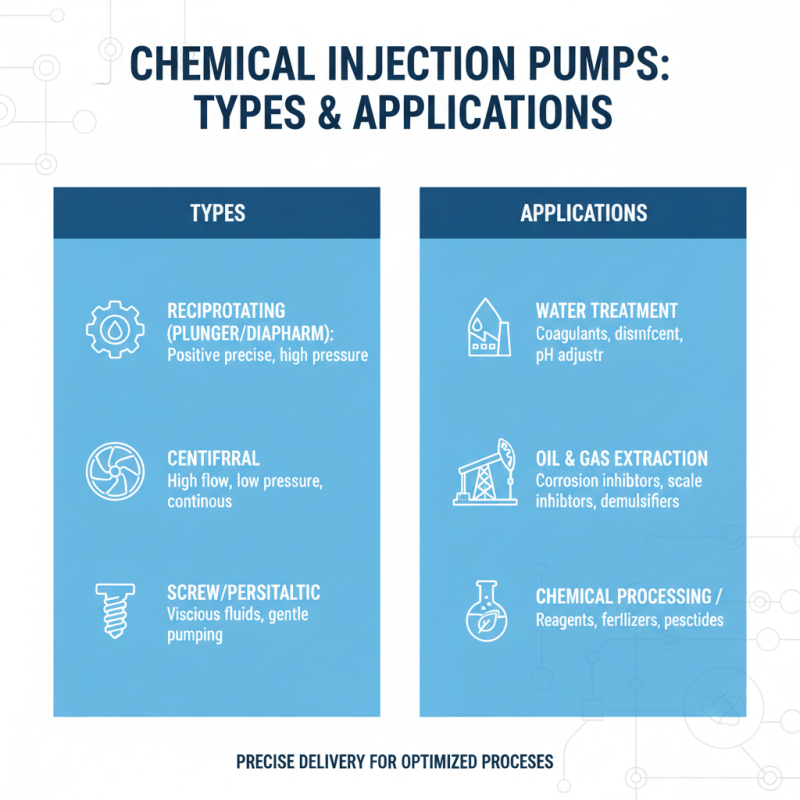
The most common types include diaphragm, piston, and peristaltic pumps. Diaphragm pumps offer reliable performance for viscous fluids. They are suitable for critical applications where chemical purity is essential. Piston pumps are ideal for high-pressure environments, efficiently handling a variety of chemical compositions. Peristaltic pumps are praised for their ability to handle shear-sensitive materials. They can also reduce contamination risks because the fluid never contacts the pump itself.

Different industries have unique requirements. For instance, oil and gas operations demand pumps that can withstand harsh conditions. In contrast, water treatment facilities focus on precision and reliability. While the options are numerous, not every pump is perfect for every application. Buyers must assess their specific needs carefully. Testing and evaluation can prevent costly mistakes in the long run.

Key Features to Consider When Selecting Chemical Injection Pumps

Top Chemical Injection Pumps for Global Buyers in 2026?

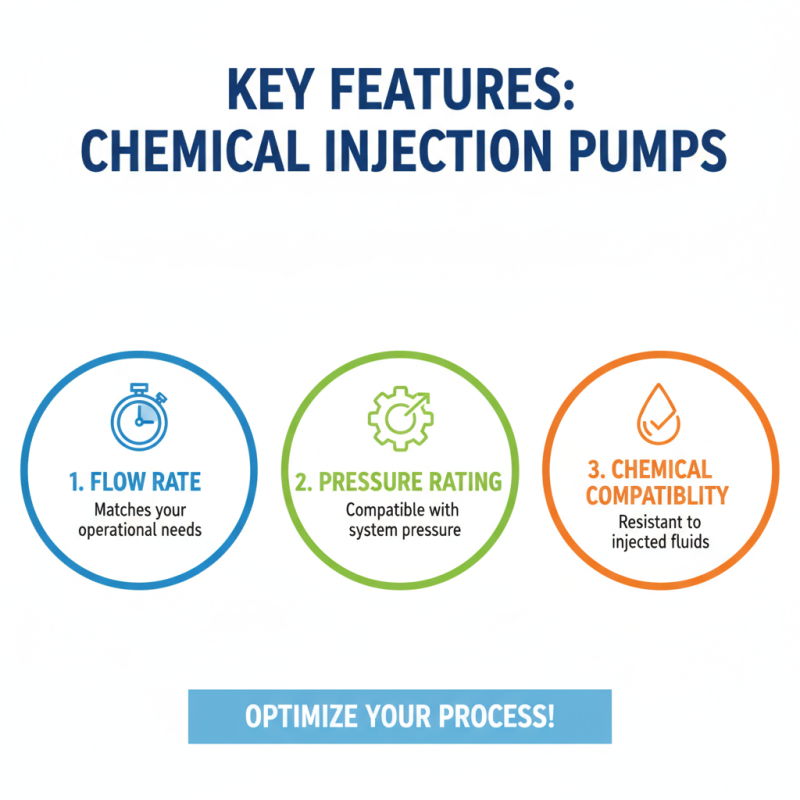
When selecting chemical injection pumps, several key features are essential. Start with the pump's flow rate. This metric determines how much chemical can be injected over time. Consider whether this flow rate matches your needs. An inappropriate rate can lead to inefficiency or operational issues.

Next, assess the materials used in the pump. Corrosion resistance is crucial in chemical applications. Pumps made from stainless steel or high-grade plastics often perform better over time. However, not all materials are suitable for every chemical. Misalignment here can lead to failures, requiring costly interventions.

Moreover, look into the pump’s control mechanisms. Adjustable flow rates and automated systems enhance flexibility. Users should reflect on how often adjustments will be needed. More features often create more complexity, which may not be beneficial for all settings. Always weigh the pros and cons carefully. Remember that the most advanced pump might not be the right choice for your situation. This balance between features and simplicity can lead to better operational reliability.

Top Manufacturers of Chemical Injection Pumps in 2026

In 2026, the market for chemical injection pumps is set to experience significant evolution. Various manufacturers are developing innovative technologies to enhance efficiency. These advancements focus on precision and reliability in chemical dosing. Many businesses seek pumps that offer high durability and low maintenance. They aim to reduce long-term operational costs while ensuring safety.

Numerous manufacturers worldwide are striving to stand out in this competitive arena. Some invest heavily in research and development. They focus on understanding the market's shifting needs. Others are updating existing models to improve performance and reduce emissions. Certification and compliance with international standards are also a priority for top players.

Challenges remain in identifying the right pump for specific applications. Buyers often face decisions regarding pump materials and compatibility with various liquids. It’s crucial for manufacturers to provide transparent information on their products. Miscommunication can lead to costly mistakes. As the market evolves, understanding customer needs and regulatory requirements is vital.

Top Chemical Injection Pumps for Global Buyers in 2026

Pump Type Maximum Flow Rate (L/h) Pressure Rating (bar) Material Compatibility Application Area
Diaphragm Pump 0-1000 0-10 PVC, PTFE Water Treatment
Piston Pump 0-500 0-40 Stainless Steel Oil & Gas
Gear Pump 0-2000 0-25 Aluminum, Cast Iron Chemical Processing
Screw Pump 0-1500 0-30 Nylon, PVC Food Industry
Peristaltic Pump 0-100 0-3 Silicone, Rubber Pharmaceuticals

Market Trends Influencing Chemical Injection Pump Demand Globally

The demand for chemical injection pumps is expected to rise significantly by 2026. Various market trends play a crucial role in this surge. Industry reports indicate a potential growth rate of 5.8% annually. This growth is driven largely by the oil and gas sector, which heavily relies on chemical dosing for production optimization.

One major trend shaping demand is the increasing focus on sustainability and efficiency. Companies are investing in advanced pump technologies that reduce waste and energy consumption. A recent survey noted that over 70% of industry professionals prioritize efficient equipment when selecting pumps. However, the transition to greener technologies does pose challenges. Some legacy systems may not easily adapt, leading to increased operational costs during the switching phase.

Moreover, the rise of automation is influencing pump performance. Automated chemical injection systems are proving to enhance accuracy and reduce manual intervention. Yet, this is not without its difficulties. Integration with existing systems can be complex. Approximately 40% of businesses cite compatibility issues as a barrier to implementing these newer solutions. As the industry evolves, understanding these dynamics will be crucial for players in this space.

Global Demand for Chemical Injection Pumps in 2026

Future Innovations and Technologies in Chemical Injection Pumps

The future of chemical injection pumps is set for significant advancements by 2026. Innovations in materials and technology are crucial. Reports indicate the global market for chemical injection pumps will grow at a CAGR of 5.8%, reaching approximately $4.2 billion by 2026. This growth is driven by increased demand in various sectors, including oil and gas, water treatment, and pharmaceuticals.

Emerging technologies will enhance efficiency and reliability. For instance, smart pumps equipped with IoT capabilities can monitor and adjust flow rates in real-time. This innovation reduces waste and improves chemical management. Data from industry experts suggests that integrating AI could optimize the pumps' operational performance, ensuring they adapt to changing conditions and usage patterns.

However, challenges remain. The transition to digital solutions can be slow. Many companies still rely on outdated systems. Training personnel on new technologies and ensuring cybersecurity can be hurdles. Investing in research and development is essential for overcoming these obstacles and staying competitive. The advancements in this field aim to meet stringent environmental regulations while enhancing user safety and reducing costs.

Whether your solution requires a single pumping application or an expansive engineered system,
CheckPoint is committed to becoming your partner in excellence.