

China Top Conductivity Meter Manufacturers for Global Buyers
Choosing a reliable Conductivity Meter supplier is not merely a procurement decision. It affects how confidently laboratories, water plants, and process teams interpret dissolved-ion levels. The need for dependable water monitoring is clear: the WHO/UNICEF Joint Monitoring Programme reported that 2.2 billion people lacked safely managed drinking water in 2022. That figure describes access, not meter sales, but it underscores the value of sound measurement.
For global buyers, manufacturer comparisons should go beyond price and catalog specifications. Check the cell constant, measurement range, temperature compensation, calibration options, and availability of replacement probes. ISO 7888:1985 sets out a method for determining electrical conductivity in water, offering buyers a useful technical reference. Lord Kelvin, a leading figure in measurement science, wrote: “When you can measure what you are speaking about...” His point still resonates. Small details matter. A clear manual and responsive technical support can matter as much as a polished instrument.
This guide introduces China-based manufacturers serving international markets and highlights practical questions buyers can ask before requesting a quotation. Compare stated accuracy with calibration documentation, and confirm which standards the supplier actually supports. A specification sheet may look convincing; it does not prove performance under your sample conditions. That distinction is easy to overlook. Supplier claims also deserve independent verification, especially when testing requirements vary by application. The goal is not to name a universal winner, but to help buyers shortlist manufacturers with transparent specifications, consistent quality controls, and dependable after-sales support.
What Conductivity Meters Measure and How They Work
China Top Conductivity Meter Manufacturers for Global Buyers
What Conductivity Meters Measure and How They Work
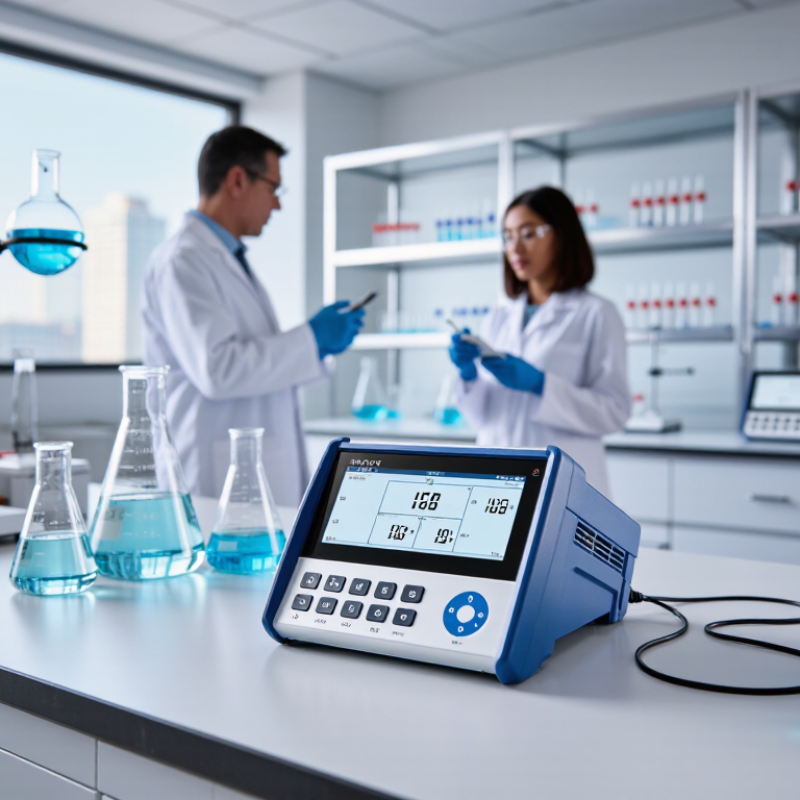
A conductivity meter estimates how easily a liquid carries electrical current. In water, dissolved ions such as sodium, chloride, and calcium help carry that charge. More ions often mean higher conductivity, but the reading cannot identify which substances are present. That distinction matters. Treat it as a process indicator, not a complete chemical analysis.
A probe applies a small alternating voltage between its electrodes and measures the resulting current. The meter uses this response, along with the probe’s cell constant, to calculate conductivity. Because temperature affects ion movement, many meters also measure sample temperature and compensate for it. Compensation helps comparisons, though it cannot correct every difference between samples. Calibration with suitable standards helps check performance before measurements.
Key Applications and Types of Conductivity Meters
Conductivity meters estimate how well a liquid carries electrical current, which helps users track dissolved ions. In water treatment, operators compare readings before and after filtration to spot changes in mineral content. A sudden rise may signal contamination or process drift, though conductivity alone cannot identify the substance responsible. It is a useful clue, not a complete diagnosis.
Meter types suit different working conditions. Portable handheld models are practical for field checks at wells, tanks, and irrigation lines. Bench meters offer stable readings for laboratory samples, with options for temperature compensation and data recording. Inline meters remain installed in pipes or process tanks, allowing continuous monitoring without repeated sample collection. Small detail, big effect: the sensor cell constant must match the expected conductivity range.
Applications vary beyond water testing. Hydroponic growers use readings to manage nutrient strength, while food and beverage teams monitor rinse water and cleaning cycles. High-purity water systems need meters suited to very low conductivity, where dirty probes or air bubbles can distort results. Rinse the probe between samples, check calibration with an appropriate standard, and record the temperature. Even careful work has limits; a hurried measurement can still mislead.
China Top Conductivity Meter Manufacturers for Global Buyers - Key Applications and Types of Conductivity Meters
| Conductivity Meter Type | Measurement Approach | Typical Measurement Capability | Key Applications | Buyer Considerations |
|---|---|---|---|---|
| Portable handheld meter | Uses a probe immersed in a sample; commonly displays conductivity and may also calculate TDS or salinity. | Ranges vary by model and probe, from low-conductivity water measurements to high-conductivity solutions. | Field water testing, aquaculture, agriculture, cooling-tower checks, and routine wastewater sampling. | Check measurement range, temperature compensation, probe durability, ingress protection, and calibration options. |
| Benchtop conductivity meter | Measures a sample in a laboratory cell, often with automatic temperature compensation and data functions. | Available with cells suited to low, medium, or high conductivity; the cell constant affects the suitable range. | Water-quality laboratories, education, food and beverage testing, and quality-control laboratories. | Consider accuracy, repeatability, supported cell constants, temperature-probe compatibility, and data export. |
| Inline contact sensor and transmitter | Electrodes contact the process liquid; a transmitter provides continuous readings and process outputs. | Selected according to the sensor cell constant and process conditions; available for different conductivity ranges. | Water treatment, chemical processing, rinse-water monitoring, and industrial process control. | Confirm process connection, materials compatibility, pressure and temperature limits, cleaning needs, and output protocol. |
| Inductive (toroidal) conductivity meter | Measures conductivity without exposed electrodes, using electromagnetic coupling through the liquid. | Best suited to applications with sufficiently conductive liquids; the usable range depends on the sensor design. | Corrosive or fouling process streams, chemical production, and wastewater applications. | Useful where electrode coating or corrosion is a concern; verify minimum conductivity and installation requirements. |
| Pure-water conductivity system | Uses a low-cell-constant probe and temperature measurement to assess very low ionic conductivity. | Designed for low-conductivity water; performance depends on probe design, flow conditions, temperature, and handling. | Pharmaceutical water systems, laboratory water, power-generation water, and semiconductor process water. | Choose a system designed for low-conductivity samples and minimize contamination from air exposure, tubing, and sample containers. |
| Resistivity meter | Reports electrical resistivity, which is inversely related to conductivity for the same measurement conditions. | Commonly used for high-purity water; ultrapure water has a theoretical resistivity of about 18.2 MΩ·cm at 25°C. | Ultrapure-water monitoring, pharmaceutical utilities, and electronics manufacturing. | Check temperature reference, low-range performance, sensor placement, and whether the system reports conductivity, resistivity, or both. |
| TDS or salinity meter | Typically estimates total dissolved solids or salinity from conductivity using a conversion factor or selected scale. | Displayed results depend on the instrument’s conversion factor, calibration, sample composition, and temperature correction. | Hydroponics, aquaculture, drinking-water screening, agriculture, and general field checks. | TDS is an estimate rather than a direct measurement of all dissolved substances; select a conversion setting appropriate to the application. |
Note: Conductivity ranges, accuracy, and temperature-compensation performance are model- and probe-dependent. Conductivity is commonly reported in μS/cm or mS/cm; resistivity is commonly reported in Ω·cm or MΩ·cm.
China’s Conductivity Meter Manufacturing Landscape
China’s conductivity meter manufacturing landscape brings together electronics assembly, sensor production, and instrument engineering across several industrial regions. This ecosystem serves varied needs, from handheld testers to benchtop meters in laboratories and water-treatment sites. Suppliers may customize probe lengths, cable fittings, display layouts, and measurement ranges. Capabilities still vary. A polished product page does not prove stable readings.
Reliable performance depends on more than the meter’s screen. Buyers should review measurement range, stated accuracy, temperature compensation, cell constant options, and probe materials. Ask how calibration is performed and whether calibration records accompany shipments. A practical check is to test samples against traceable reference solutions at several conductivity levels. Small details matter. A loose connector or poorly sealed probe can distort field readings. Batch quality may differ, so request written inspection criteria. Some specifications remain unclear until samples arrive; that is inconvenient, but it should prompt better questions, not assumptions.
Tips: Share the sample type, expected range, and operating temperature before requesting quotations. Confirm spare-probe availability, packaging, manuals, and technical support response times. Compare documented test results, not just prices. If readings drift, check cleaning, temperature settings, and calibration before blaming the instrument.
How to Evaluate Chinese Conductivity Meter Manufacturers
Evaluating Chinese conductivity meter manufacturers takes more than comparing catalogue prices. Start with the measurement range, accuracy, resolution, and temperature compensation. These specifications should match your actual samples, whether you test clean water, process liquids, or wastewater. Ask how the stated accuracy was verified, and request calibration records with traceable standards. A clear answer matters.
Check the electrode and meter as a working pair. Confirm the cell constant, connector type, materials, and replacement availability. For a practical comparison, test a sample unit using standard solutions at controlled temperatures. Record how quickly readings stabilize and whether results repeat after rinsing. Small details matter. A polished catalogue cannot show how a probe handles a crowded bench or frequent cleaning.
Review production controls, inspection records, user manuals, and technical support before placing a large order. Ask how the supplier manages calibration, repairs, spare parts, and software updates. Verify any claimed quality certificates with the issuing organization. It is easy to overvalue a low quotation; delivery consistency and support can matter more over time. Still, a detailed checklist may miss daily usability, so ask operators to assess the display, buttons, and cleaning routine. Their feedback can reveal useful flaws.
Sourcing, Compliance, and Quality Checks for Global Buyers
Choosing a conductivity meter supplier in China starts with matching the instrument to the sample and working range. Ask for the cell constant, temperature compensation method, stated accuracy, and recommended calibration interval. A meter tested in clean water may perform differently with a salty or viscous sample. Request a sample unit and compare readings against a trusted reference solution. Small details matter.
Before placing an order, review the documents required for your destination market. These may include electrical safety records, material declarations, user instructions, and calibration certificates. Requirements differ by country and product configuration, so verify them with your importer or compliance adviser. Check that model numbers match across the quotation, label, manual, and test reports. A polished certificate is not enough if it covers another model.
Quality checks should go beyond a factory’s written inspection plan. Ask how electrodes are inspected, how temperature sensors are tested, and whether calibration results can be traced to recognized standards. For a pilot order, record readings at several known solution values and test repeatability after rinsing and drying the probe. Keep photos of packaging and labels when samples arrive. Not always perfect. Suppliers may respond slowly or provide incomplete records; note gaps, request corrections, and avoid treating verbal assurances as evidence.
Article Source:

Whether your solution requires a single pumping application or an expansive engineered system,
CheckPoint is committed to becoming your partner in excellence.


