What is a Vacuum Insulated Pipe and How Does It Work?
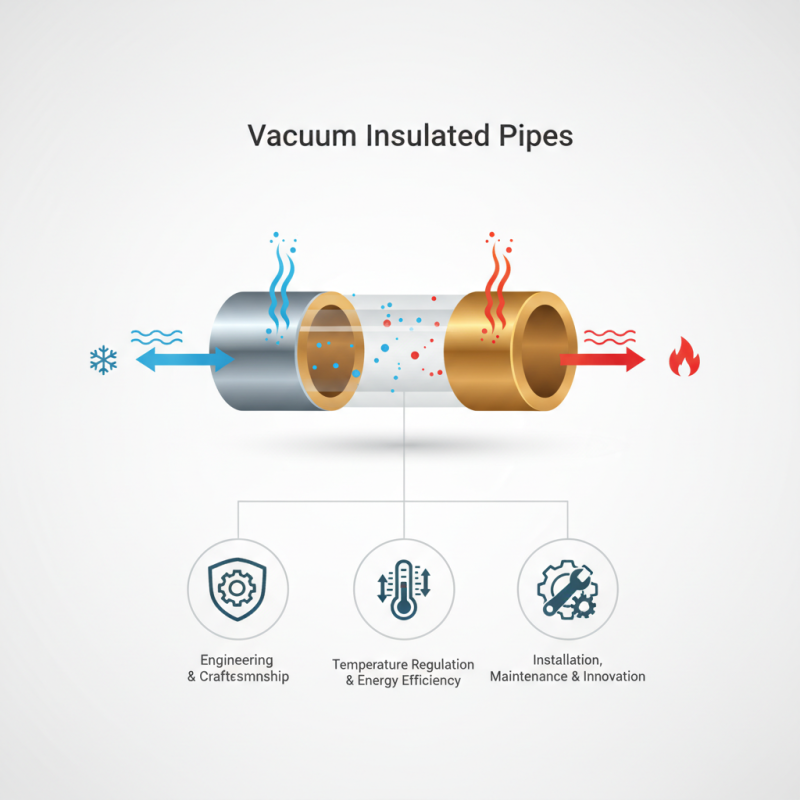
Vacuum Insulated Pipes (VIPs) are becoming essential in various industries, providing effective thermal insulation for transporting fluids. According to Dr. Emily Chen, a noted expert in thermal engineering, "Vacuum Insulated Pipes offer unparalleled performance in maintaining temperature, significantly reducing energy loss." This technology relies on the vacuum between the pipe walls to prevent heat transfer, ensuring that heated or cooled materials maintain their desired temperatures over long distances.
The design and application of Vacuum Insulated Pipes highlight the delicate balance of engineering and usability. For example, their construction requires precision to prevent leaks that compromise insulation performance. This level of craftsmanship is crucial in specialized applications like cryogenics and district heating. Despite their advantages, challenges exist, such as the potential for structural weaknesses under extreme conditions.
As industries adopt Vacuum Insulated Pipes, the need for expertise grows. Engineers must continually refine their techniques to overcome issues related to installation and maintenance. The ongoing development in this sector indicates a promising future, but vigilance and innovation are essential to ensure reliability and efficiency.
What is a Vacuum Insulated Pipe?
Vacuum insulated pipes are fascinating innovations designed for thermal efficiency. They consist of two concentric pipes with a vacuum seal in between. This vacuum layer minimizes heat transfer, ensuring that the contents within remain at a stable temperature. Engineers often use these pipes in various industries, especially for transporting liquids that require temperature control.
This type of insulation is crucial in applications such as cryogenics, pharmaceuticals, and food preservation. The ability to maintain extreme temperatures, whether hot or cold, makes vacuum insulated pipes valuable. However, like all technologies, they come with challenges. Installation can be complex, and the materials must be durable to withstand environmental stressors. This complexity raises questions about reliability over time, prompting engineers to consider maintenance plans.
As technology advances, vacuum insulated pipes may evolve. New materials and designs could enhance their performance. However, ensuring a balance between efficiency and cost will remain a topic of discussion. Innovations must also address concerns about environmental impact and sustainability. The future of vacuum insulated pipes offers exciting possibilities, but reflection on their current limitations is necessary.
Vacuum Insulated Pipe Performance Comparison
This chart displays the thermal efficiency of different types of vacuum insulated pipes over time. The X-axis represents time in hours, while the Y-axis represents temperature retention in degrees Celsius.
Principle of Operation for Vacuum Insulated Pipes
Vacuum insulated pipes (VIPs) are designed to minimize heat transfer through a vacuum layer. This layer creates an environment where thermal conductivity is significantly reduced. Industry reports indicate that VIPs can achieve heat loss as low as 1% compared to conventional pipes. This efficiency is crucial in various applications, especially in transporting chilled liquids or gases over long distances.
The principle of operation for vacuum insulated pipes relies on two main concepts: conduction and convection. The vacuum eliminates air, which is a primary conductor of heat. This reduction significantly lowers thermal bridging. Moreover, the outer casing of the pipe often uses specialized materials to enhance durability without compromising insulation properties. In some designs, an additional reflective layer is utilized to further deflect radiant heat. Data from engineering analyses suggest that VIPs can outperform traditional insulation materials by up to five times in specific scenarios.
Despite the efficiency, some challenges remain with VIPs. They can be more expensive to manufacture compared to traditional systems. Installation requires precision, as any breach in the vacuum can greatly diminish performance. It’s critical to develop advanced techniques for maintaining vacuum integrity over time. Continuous research is necessary to improve reliability and cost-effectiveness in real-world applications.
Key Components of Vacuum Insulated Pipes
Vacuum insulated pipes are essential in industries requiring thermal efficiency. They consist of several key components: an inner pipe, an outer pipe, a vacuum layer, and insulation. The inner pipe carries the fluid, while the outer pipe provides structural integrity. The vacuum between the pipes minimizes heat transfer through conduction and convection.
One critical aspect is the insulation layer. Advanced materials, such as aerogel and polyurethane, enhance thermal performance. According to industry data, vacuum insulated pipes can reduce heat loss by up to 95%. This efficiency is vital for applications like cryogenics and district heating systems.
Despite the advantages, challenges persist. Manufacturing precision is required to maintain the vacuum seal. Any defects can compromise performance. Additionally, the cost of these pipes can deter some projects. Balancing cost and efficiency remains a focus for engineers and manufacturers alike.
Applications of Vacuum Insulated Pipes in Industry
Vacuum insulated pipes play a crucial role in various industries, particularly in the fields of cryogenics and thermal transfer. Their design, featuring an inner and outer pipe with a vacuum layer, minimizes heat transfer. This technology is essential for transporting liquefied gases like nitrogen and natural gas, which require strict temperature control. According to a report by the International Institute of Refrigeration, the use of vacuum insulated pipes can reduce thermal loss by over 90%. This efficiency translates to significant energy savings and reduced operational costs.
In the food and beverage industry, vacuum insulated pipes ensure that sensitive materials are kept at optimal temperatures during transport. For instance, milk and other dairy products benefit from this technology, helping maintain freshness. A study by the Food and Agriculture Organization suggests that proper insulation can extend shelf life by up to 30%, enhancing product quality and safety. However, vacuum insulated systems can be costly to install and maintain. Businesses often weigh the initial investment against long-term savings, which can vary based on application and usage.
Nevertheless, the reliability of these pipes makes them indispensable in industrial applications. From chemical processing to pharmaceuticals, their use is widespread. Yet, industries must not overlook the maintenance of these systems. Regular checks are vital to ensure that leaks don’t occur, which can compromise efficiency. In conclusion, the benefits are evident, but there are still challenges to address in adopting vacuum insulated pipes across all sectors.
What is a Vacuum Insulated Pipe and How Does It Work?
| Dimension | Value | Description |
| Thermal Conductivity | 0.02 W/m·K | Very low thermal conductivity due to vacuum insulation. |
| Operating Temperature Range | -196°C to 200°C | Suitable for cryogenic and high-temperature applications. |
| Applications | Cryogenics, Oil & Gas, Food Processing | Used extensively to maintain temperature in various industries. |
| Lifespan | 25 years | Long-lasting performance with minimal maintenance. |
| Pipe Diameter | 20 mm to 1000 mm | Available in a range of sizes to fit different installations. |
Benefits of Using Vacuum Insulated Pipes
Vacuum insulated pipes (VIPs) have gained attention in various industries, primarily due to their remarkable thermal insulation properties. These pipes use a vacuum between two layers to minimize heat transfer. According to a study from the International Journal of Thermal Sciences, vacuum insulated pipes can reduce thermal energy loss by up to 97%. This significant efficiency is crucial in applications like cryogenics and district heating.
The benefits of utilizing vacuum insulated pipes extend beyond just energy savings. Their lightweight design allows for easier handling and installation. Additionally, VIPs have a longer lifespan compared to traditional insulation methods. A report by the American Society of Mechanical Engineers (ASME) highlights that proper use of vacuum insulation can result in maintenance cost reductions by up to 30%. These attributes make VIPs an attractive option for industries looking to enhance efficiency while reducing operational costs.
However, vacuum insulation is not without its challenges. Installation errors can lead to compromised insulation efficiency. A meticulous approach is essential during both manufacturing and installation phases. Also, while highly effective, VIPs can be more expensive than traditional insulation options upfront. Organizations must weigh these factors carefully to evaluate the long-term benefits against initial investments. Balancing cost and performance is key in making informed decisions about insulation strategies.