



Why Choose a Long Distance Wireless Camera for Security?

Security needs have moved beyond a camera mounted beside the front door. Large yards, farm entrances, warehouses, and remote construction areas require wider reach and fewer cable limitations. A Long Distance Wireless Camera can connect distant viewpoints while reducing trenching, drilling, and installation disruption.

Industry forecasts show strong demand for video surveillance. Grand View Research valued the global market at approximately $54.2 billion in 2023. It expects a 12.9% compound annual growth rate from 2024 to 2030. MarketsandMarkets reports different figures, reflecting changing definitions and market boundaries. The direction remains clear.

But range claims deserve careful attention.

Wireless distance depends on walls, trees, metal structures, antenna height, weather, and network congestion. A camera advertised for 1,000 feet may perform very differently beside a concrete warehouse. That is where practical testing matters. Installers should measure signal strength at the intended mounting point, not only beside the router.

Bruce Schneier, a respected security technologist, states, “Security is a process, not a product.” His warning applies directly here. A reliable camera needs encrypted transmission, strong passwords, firmware updates, secure storage, and sensible access controls. Distance alone does not create protection.

The strongest reason to choose a Long Distance Wireless Camera is operational flexibility. A property owner can monitor a dark gate, distant loading bay, or isolated equipment area without extending long video cables. Motion alerts can reduce unnecessary viewing. Night vision can reveal tire tracks and open doors.

Still, wireless is not magic.

Battery life, signal interruptions, and privacy expectations require ongoing review. The best system combines measured range, clear footage, responsible data handling, and realistic maintenance planning. That balance makes the technology useful, rather than merely impressive on paper.
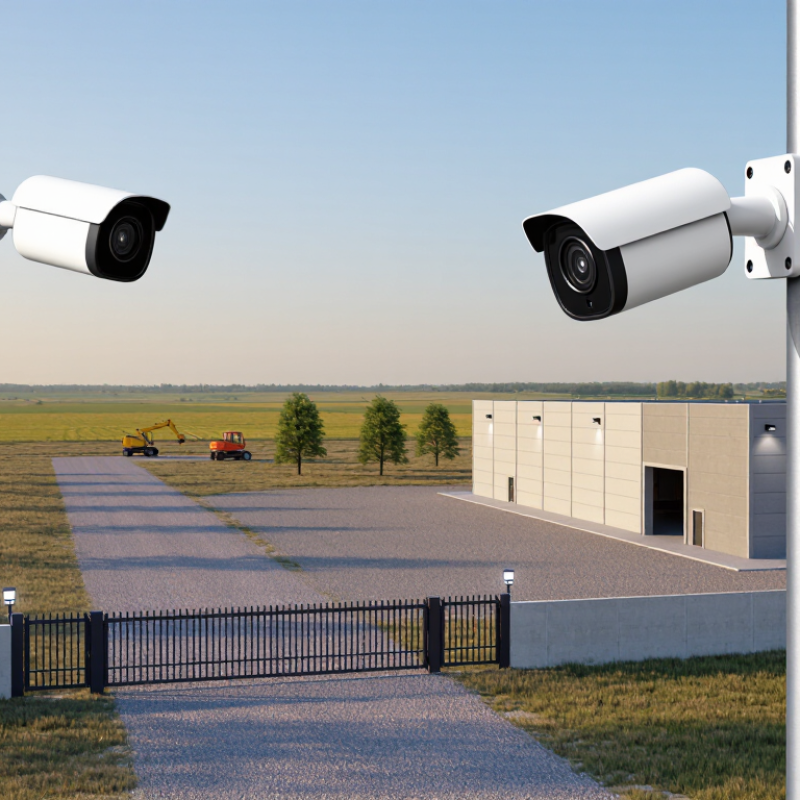
Why Choose a Long Distance Wireless Camera for Security?

What Is a Long-Distance Wireless Camera?

A long-distance wireless camera is a security device that captures video and sends it to a receiver, recorder, or monitoring application without a conventional video cable. It may use a long-range radio connection, a cellular network, or an extended wireless network. The camera, antenna, power source, and receiver work as one system. Its useful distance depends on more than advertised specifications. Clear line of sight usually improves communication. Trees, concrete walls, metal structures, and electrical interference can weaken the signal. Real locations are less predictable.

It is not magic. In practical installations, I check the distance, mounting height, weather exposure, and power access before selecting equipment. A camera placed beside a warehouse entrance may need night illumination and a stable connection through changing weather. Motion detection can reduce unnecessary recordings, while encrypted transmission and strong account protection help limit unauthorized access. Local storage may keep footage available when the wireless link fails. That detail matters. A strong signal alone does not guarantee reliable security. I have also seen distant cameras perform poorly because installers ignored battery capacity or seasonal obstacles. The “long-distance” label can therefore be useful, but it should never replace a site survey, connection test, and careful maintenance plan.

How Long-Distance Wireless Cameras Transmit Video and Data

Why Choose a Long Distance Wireless Camera for Security?

A long-distance wireless camera sends video through radio, Wi-Fi, cellular networks, or dedicated point-to-point links. The camera first captures light with its image sensor. Its processor then compresses each frame, often using H.264 or H.265. Smaller files travel more efficiently across limited bandwidth. The data is divided into packets before transmission. At the receiving point, software rebuilds those packets into live video or stored footage. Cisco’s Annual Internet Report (2018–2023) projected 29.3 billion networked devices by 2023, including 14.7 billion machine-to-machine connections. That growth increases network traffic around security systems.

Distance changes the engineering problem. Walls, trees, metal structures, and rain can weaken radio signals. A clear line of sight usually improves stability. Directional antennas can focus energy toward a remote gate, warehouse, or farm entrance. Some systems store footage locally when the connection drops, then upload missing clips later. Useful, but not perfect. A poor installation can create blind spots or delayed alerts. Encryption, authenticated access, and current firmware also matter during transmission. The National Institute of Standards and Technology recommends secure configuration and continuous patching for connected devices in its Cybersecurity Framework 2.0 (2024). MarketsandMarkets’ Video Surveillance Market report projects strong market growth through 2028, reflecting wider adoption of networked monitoring. However, reported market expansion does not guarantee reliable performance at every site. Test signal strength at the camera position, measure nighttime bandwidth, and check whether recorded footage remains clear during interference.

Why Choose a Long Distance Wireless Camera for Security? - How Long-Distance Wireless Cameras Transmit Video and Data

Data Dimension Typical Technical Information Security Value Important Considerations
Wireless Transmission Methods Common options include Wi-Fi, point-to-point wireless bridges, cellular networks, and mesh networking. Allows video to reach monitoring equipment without installing long dedicated cables. The appropriate method depends on distance, line of sight, infrastructure, and available network service.
Typical Transmission Distance Indoor Wi-Fi commonly covers several tens of metres. Outdoor point-to-point systems can cover several hundred metres to multiple kilometres when correctly aligned. Supports monitoring of gates, farms, warehouses, construction areas, and separated buildings. Actual range changes with antenna gain, mounting height, radio power limits, interference, weather, and obstructions.
Line of Sight A clear visual path between wireless endpoints generally provides the most stable long-distance connection. Improves live-view reliability and reduces dropped frames. Walls, dense vegetation, hills, metal structures, and reinforced concrete can significantly weaken the signal.
Video Resolution Typical security cameras provide 1080p or 4K video. Higher resolution produces more image detail and requires more bandwidth. Helps identify faces, vehicles, license plates, and activity at greater distances when lighting is adequate. Resolution alone does not guarantee identification quality; lens selection, lighting, focus, and scene distance are also important.
Bandwidth Requirements Compressed 1080p streams often require approximately 2–6 Mbps, while 4K streams commonly require approximately 8–16 Mbps, depending on encoding and frame rate. Adequate bandwidth enables smoother live viewing and more dependable cloud or network recording. Multiple cameras share available capacity. Motion, detail, frame rate, and compression settings affect actual usage.
Video Compression H.264 and H.265 are widely used to reduce video size while preserving useful image detail. Reduces network load and storage requirements for continuous or event-based recording. The receiving recorder, browser, or mobile application must support the selected codec.
Latency Local wireless links may provide near-real-time viewing, while cloud or cellular connections can introduce additional delay. Lower latency is useful for active monitoring, remote access, and two-way communication. Delay depends on signal quality, encoding, network routing, server location, and congestion.
Data Security Modern systems can use encrypted wireless links, secure passwords, encrypted remote access, and authenticated devices. Helps protect live video, recorded footage, and device-management traffic from unauthorized access. Use strong unique passwords, current firmware, access controls, and network segmentation where possible.
Power Options Cameras may use mains power, Power over Ethernet, rechargeable batteries, or solar-assisted power systems. Enables surveillance in locations where installing new electrical or data cables is difficult. Battery life depends on recording mode, infrared use, temperature, signal strength, and the number of motion events.
Weather and Environmental Resistance Outdoor equipment is commonly specified with an ingress-protection rating such as IP65 or IP66 for protection against dust and water jets. Supports dependable operation in exposed outdoor locations. An IP rating does not describe impact resistance, temperature range, corrosion protection, or image performance in poor weather.
Storage and Recording Footage may be stored on a memory card, network video recorder, local server, or cloud platform. Provides evidence review, event playback, and longer-term incident analysis. Storage duration depends on resolution, bitrate, frame rate, recording schedule, and available capacity.
Scalability Wireless systems can often add cameras without trenching or installing a separate cable run for every location. Makes it easier to expand coverage as property boundaries or security requirements change. Additional cameras increase bandwidth, storage, power, and wireless-interference requirements.
Installation and Maintenance Wireless installation can reduce cable work, but cameras still require secure mounting, correct alignment, power, configuration, and periodic inspection. Shortens deployment time and makes relocation or system changes more practical. Wireless links should be surveyed and tested after installation to verify signal strength, throughput, and stability.

Note: Performance figures are typical planning ranges rather than guarantees. Actual results depend on local regulations, equipment configuration, installation height, environmental conditions, interference, and network traffic.

Key Security Benefits of Extended-Range Wireless Monitoring

A long distance wireless camera helps monitor areas that ordinary indoor systems cannot reach. It can cover a detached garage, farm entrance, warehouse yard, or long driveway without requiring a buried data cable. In practical installations, camera placement matters more than advertised distance. A clear line of sight usually provides a steadier connection than walls, trees, or metal structures.

Extended-range monitoring improves security awareness across wider spaces. Motion alerts can reveal movement near a distant gate before someone reaches the main building. Infrared lighting can capture activity after sunset, while high-resolution video may show clothing, vehicle shape, or direction of travel. Two-way audio also allows staff to challenge an unknown visitor without walking outside. Keep alerts specific. Too many notifications quickly become background noise.

Wireless links are not flawless. Heavy rain, dense walls, electrical interference, and poor antenna height can reduce performance. I have seen a camera work well during testing, then lose stability after nearby equipment was installed. A site survey, strong encryption, updated firmware, and separate user permissions improve reliability. Local recording can preserve footage during a temporary network outage. Storage settings still deserve review, because excessive retention creates unnecessary privacy and management risks. The system should be tested at night, during bad weather, and from the farthest monitoring point. Small oversights matter.

Factors to Consider Before Choosing a Long-Distance Camera

Why Choose a Long Distance Wireless Camera for Security?

Choosing a long-distance wireless camera requires more than checking its advertised range. Walls, trees, metal surfaces, and rain can weaken the signal. A camera claiming 300 meters outdoors may deliver far less beside concrete buildings. Test the route with a temporary installation. Small obstacles matter.

Image quality also depends on distance and network capacity. A 4K stream can consume substantial bandwidth, especially during continuous recording. Check upload speed, latency, and connection stability at the exact mounting point. A nearby access point or mesh node may improve reliability, but it can also create another failure point. That detail is easy to miss.

Power planning deserves equal attention. Battery models need realistic estimates for night vision, motion alerts, and cold weather. A solar panel may perform poorly under shade or winter cloud. Choose local storage or encrypted cloud storage, and confirm how footage is protected. The 2024 Verizon Data Breach Investigations Report analyzed 30,458 security incidents and 10,626 confirmed breaches, reinforcing the need for unique passwords, multi-factor authentication, and current firmware. Security is not only about seeing farther.

Look for infrared clarity, weather resistance, adjustable detection zones, and useful alert delays. Test a person walking past the camera, not just a bright daytime scene. False alerts waste attention. They happen. Privacy requirements also vary by location, so review local rules before recording neighboring spaces. A perfect specification sheet cannot replace a careful site test.

Why Choose a Long Distance Wireless Camera for Security?

Factors to Consider Before Choosing a Long-Distance Camera

Wireless signals lose strength when passing through construction materials. The values shown are typical approximate attenuation ranges in decibels (dB): higher loss means a greater risk of reduced range, lower video quality, or connection instability. Before selecting a long-distance wireless camera, consider wall materials, installation distance, antenna placement, frequency band, and line of sight.

Common Applications and Installation Requirements

Why Choose a Long Distance Wireless Camera for Security?

A long distance wireless camera suits properties where cabling is expensive or disruptive. Common applications include farms, warehouses, parking areas, construction sites, and remote entrance gates. One camera can monitor a wide driveway, loading zone, or perimeter without extensive trenching. Wireless installation also allows repositioning when site conditions change. However, distance alone does not guarantee reliable video. Walls, trees, metal structures, and radio interference can weaken the connection. In practical projects, the clearest camera view is not always the best network position.

Installation requires careful planning. Mount the camera high enough to reduce tampering, but keep the lens accessible for cleaning. A stable power source is essential, even when video transmission is wireless. Check the expected range with doors, vehicles, and seasonal foliage in place. Use weather-resistant housing for outdoor locations.

The receiving unit should have a clear path whenever possible. Set strong account credentials, enable encrypted communication, and restrict viewing permissions. Local recording can help when the connection briefly fails. Still, storage capacity and retention settings need regular review.

Tips: Test the signal before permanent mounting. Record a short clip at night. Check faces, gate numbers, and moving shadows. Leave room for improvement; the first position may be convenient, but not ideal. Follow applicable privacy requirements and inform people when monitoring is legally required.

Whether your solution requires a single pumping application or an expansive engineered system,
CheckPoint is committed to becoming your partner in excellence.