

China Top Water Pump Manufacturers How to Choose?
Choosing among China’s top water pump manufacturers requires more than comparing price lists. It demands evidence, field experience, and technical judgment. Many buyers search “pump water” solutions by flow rate alone. That approach is incomplete. A pump must match head pressure, fluid temperature, solids content, duty cycle, and installation conditions. A stainless-steel pump may suit clean process water, while a cast-iron unit may better handle drainage applications.
The U.S. Department of Energy identifies pumping systems as major industrial energy users, with optimization often reducing operating costs through better sizing and control. The International Energy Agency has also reported that water supply and wastewater services consume a significant share of global electricity. These findings make efficiency more than a marketing phrase. Impeller design, motor efficiency, variable-frequency drives, and measured performance curves deserve careful review.
China has a broad manufacturing base, from established municipal suppliers to specialized OEM factories. However, “top” does not always mean best for every project. Buyers should verify ISO 9906 testing, applicable GB standards, factory inspection records, material certificates, and reference installations. Request the actual pump curve, not only a catalog image. Check noise, vibration, seal life, spare-parts availability, and after-sales response times.
No ranking is perfect.
A supplier may show impressive laboratory data but limited field support. Another may offer a low purchase price while consuming more electricity for ten years. This guide therefore evaluates manufacturers through measurable performance, application fit, production capability, documentation, and total lifecycle cost. Some conclusions may remain uncertain without site data. That is precisely why careful comparison matters before signing a purchase order.
Types of Water Pump Manufacturers in China
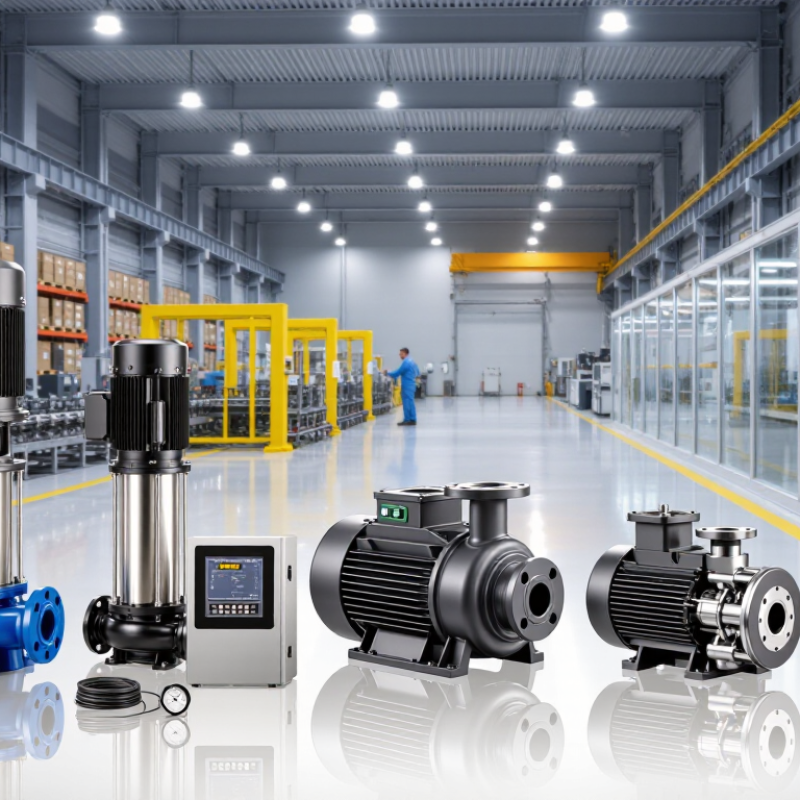
China’s water-pump manufacturers usually fall into four practical groups. OEM and ODM factories produce standard or customized pumps at scale. Specialized manufacturers focus on sewage, chemical, deep-well, or high-pressure applications. Project suppliers combine pumps with controls, pipes, and installation support. Trading companies offer wider catalogs, but their technical control may be limited.
The choice should match the water duty, not only the quotation. UNESCO’s 2024 World Water Development Report states that agriculture accounts for about 70% of global freshwater withdrawals. Irrigation projects therefore need reliable flow, efficient motors, and strong corrosion resistance. Industrial buyers may require precise pressure control and material traceability. For municipal sewage, solids-handling design matters more than a polished brochure.
Factory-direct sourcing can reduce communication layers. It can also create hidden risks. Ask for pump curves, test records, motor efficiency data, and spare-parts availability. ISO 9001 certification supports process control, but it does not prove field performance. The International Energy Agency reports that electric motor systems consume roughly half of global electricity, making efficiency a serious operating-cost issue. A low purchase price may look attractive. It may not remain economical after months of energy use. Audit production capacity, inspect sample units, and request references from similar operating conditions before signing.
Key Factors for Evaluating Chinese Water Pump Manufacturers
China Top Water Pump Manufacturers: How to Choose
Evaluating Chinese water pump manufacturers requires more than comparing prices. Start with the factory’s production experience, technical team, and export history. Ask how many years they have built similar pumps. Review project references from agriculture, construction, or industrial water systems. A reliable supplier should provide clear performance curves, material specifications, and testing records. Vague answers are a warning sign.
Inspect the manufacturing process, even through a video audit. Look for machining equipment, assembly lines, pressure-testing stations, and organized storage. Ask whether each pump receives flow, head, vibration, and insulation tests before shipment. Check traceability for motors, seals, impellers, and electrical components. Small details matter. One missing test record can create expensive problems later.
Request a sample and compare its actual performance with the stated data. Confirm energy efficiency, noise levels, operating temperature, spare-part availability, and warranty terms. The supplier should understand your voltage, water quality, installation conditions, and local compliance requirements. Do not accept copied certificates without verification. A polished brochure proves little. I have learned that even experienced buyers can overlook after-sales response time. Test communication before signing: send technical questions and measure the clarity, speed, and consistency of each reply.
How to Verify Quality, Certifications, and Production Capability
Comparing Prices, Customization, and After-Sales Support
China Top Water Pump Manufacturers How to Choose?
Choosing among China’s top water pump manufacturers requires more than comparing catalog prices. In project purchasing, I have seen a low quote grow after adding molds, export packaging, testing, and freight. Ask for an itemized quotation. It should list pump head, flow rate, motor efficiency, materials, and payment terms. A cheaper pump may consume more electricity each month. Request performance curves and a factory test report before judging value. Numbers matter.
Customization can improve fit, but it also increases risk and lead time. Confirm whether the supplier can adjust impeller diameter, flange size, seal material, voltage, or control-panel language. Ask for a drawing with revision numbers. One overlooked dimension can delay installation. Sample approval is useful, although samples may not reflect mass production perfectly. That is an uncomfortable limitation. Price the tooling separately, and confirm who owns it after production.
After-sales support often separates a dependable supplier from a difficult one. Check warranty length, response hours, spare-parts availability, and technician language. Ask how faults are diagnosed remotely. A useful provider should share wiring diagrams, maintenance intervals, and clear replacement procedures. Test this support before ordering by sending technical questions. Slow replies are warning signs. Also request references from similar installations, not only polished testimonials. A written service agreement should define response times, replacement terms, and costs for on-site visits.
How to Choose a China Water Pump Manufacturer
Comparison of representative supplier profiles using normalized procurement scores from 1 to 5
Price competitiveness should be assessed together with customization capability and after-sales support. A lower purchase price may lead to higher lifecycle costs if spare parts, technical assistance, or warranty response are limited. The scores are an anonymized evaluation framework and do not represent any specific company or brand.
Steps to Select the Right China Water Pump Manufacturer
China Top Water Pump Manufacturers: How to Choose?
Selecting the right China water pump manufacturer starts with your operating data. Record flow rate, head, liquid temperature, solids, voltage, and daily running hours. A pump chosen from price alone may fail at the real duty point.
Check manufacturing capability before requesting a final quotation. Review machining equipment, assembly procedures, quality records, and inspection staff. Request test reports based on ISO 9906, especially for flow, head, power, and efficiency.
Confirm materials through certificates, not verbal promises. For corrosive water, inspect the wet-end material and coating process carefully.
A small material mismatch can shorten service life. Sometimes, our specifications are incomplete. That deserves honest review.
Tips:
Compare at least three manufacturers using the same technical sheet. Request a video factory audit or an independent inspection. Verify spare-parts availability, warranty terms, installation support, and response times. Ask for references from similar applications, not unrelated projects. Calculate lifecycle cost, including energy, maintenance, downtime, and replacement parts. The World Pumps industry guidance repeatedly emphasizes matching pump selection with system demand, not maximum capacity. Oversizing feels safer, but it can increase throttling losses and operating costs.
Related Posts
-
What Are the Top Motor Pump Types for Global Buyers?
-
How to Efficiently Pump Water for Global Procurement Needs?
-
What is a Motor Pump and How Does It Work?
-
How to Effectively Pump Water for Your Home Garden?
-
How to Choose the Right Motor Pump for Your Needs?
-
Liquid Pump Innovations and Industry Trends Highlighted at 2025 China Import and Export Fair

Whether your solution requires a single pumping application or an expansive engineered system,
CheckPoint is committed to becoming your partner in excellence.